

- Home
- Works & Tech
- Trying a Simple Electronics Project Where You Move a Character to Play! (IchigoJam)
Tech Articles
Trying a Simple Electronics Project Where You Move a Character to Play! (IchigoJam)
Just Try Turning Your Idea into Something Real
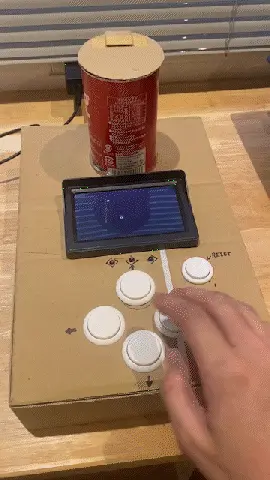
This time, using an IchigoJam microcontroller, we tried to see whether an idea could take shape using the simplest possible modules (electronic components) and familiar things found around the house.
The game itself is very simple. You move the player on the screen up, down, left, and right, and you reach the goal after touching the target three times. Each time the player touches the target, an LED lights up, and on the third touch, a character pops out as a finale. We also added a reset button so you can play again and again.
The Program
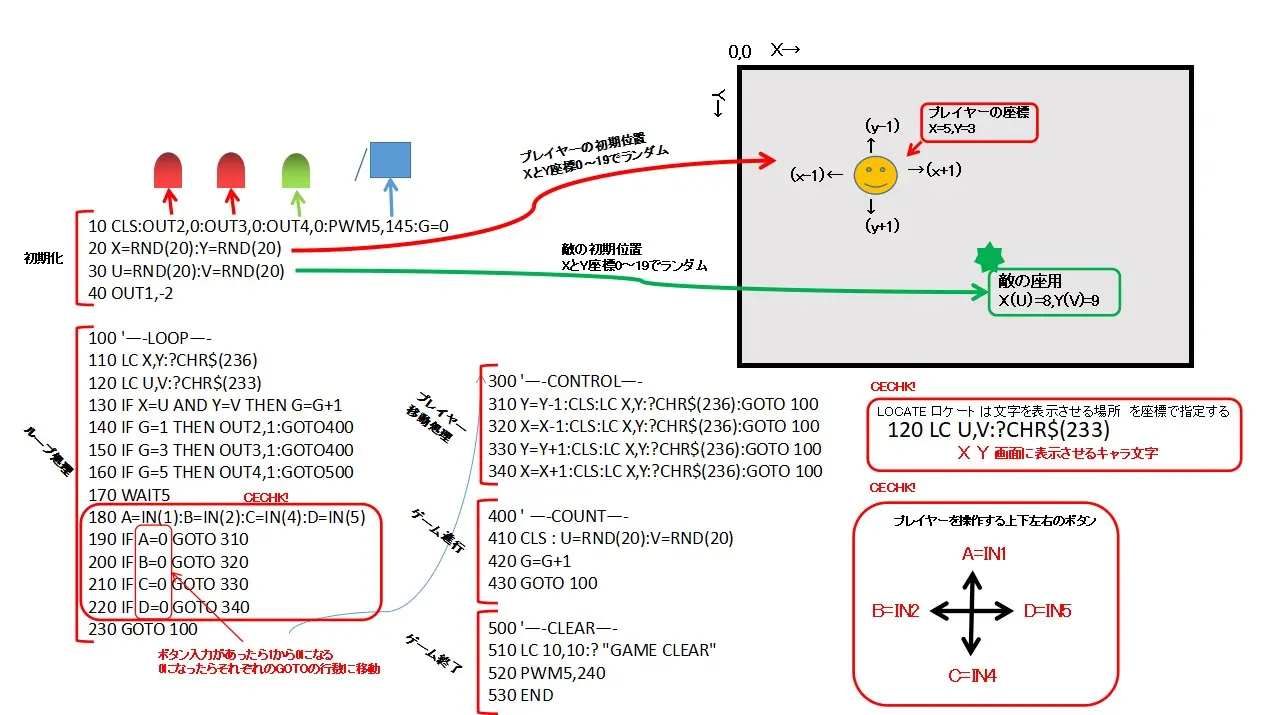
The image below shows the BASIC program used in the game, with a brief explanation.
We kept the program as simple and easy to understand as possible.
Challenges During Development
There were several minor issues, but the two biggest challenges this time were the following.
Pressing the right button also triggered "down"
Of the buttons that move the player up, down, left, and right, pressing the right button somehow also triggered the down button.
We solved this by changing line 40 of the program to "OUT1, -2".
The figure did not pop out properly when the game was cleared
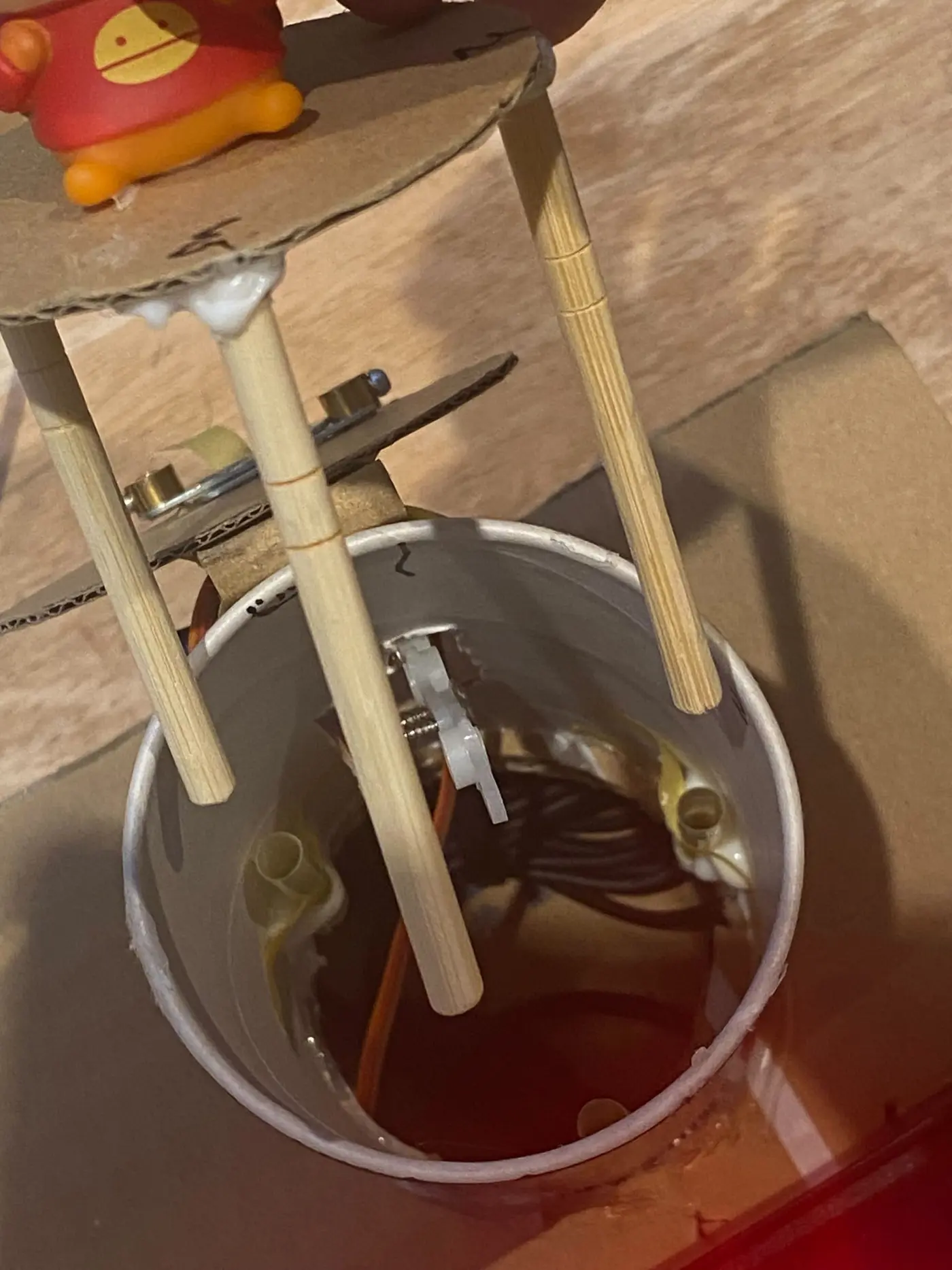
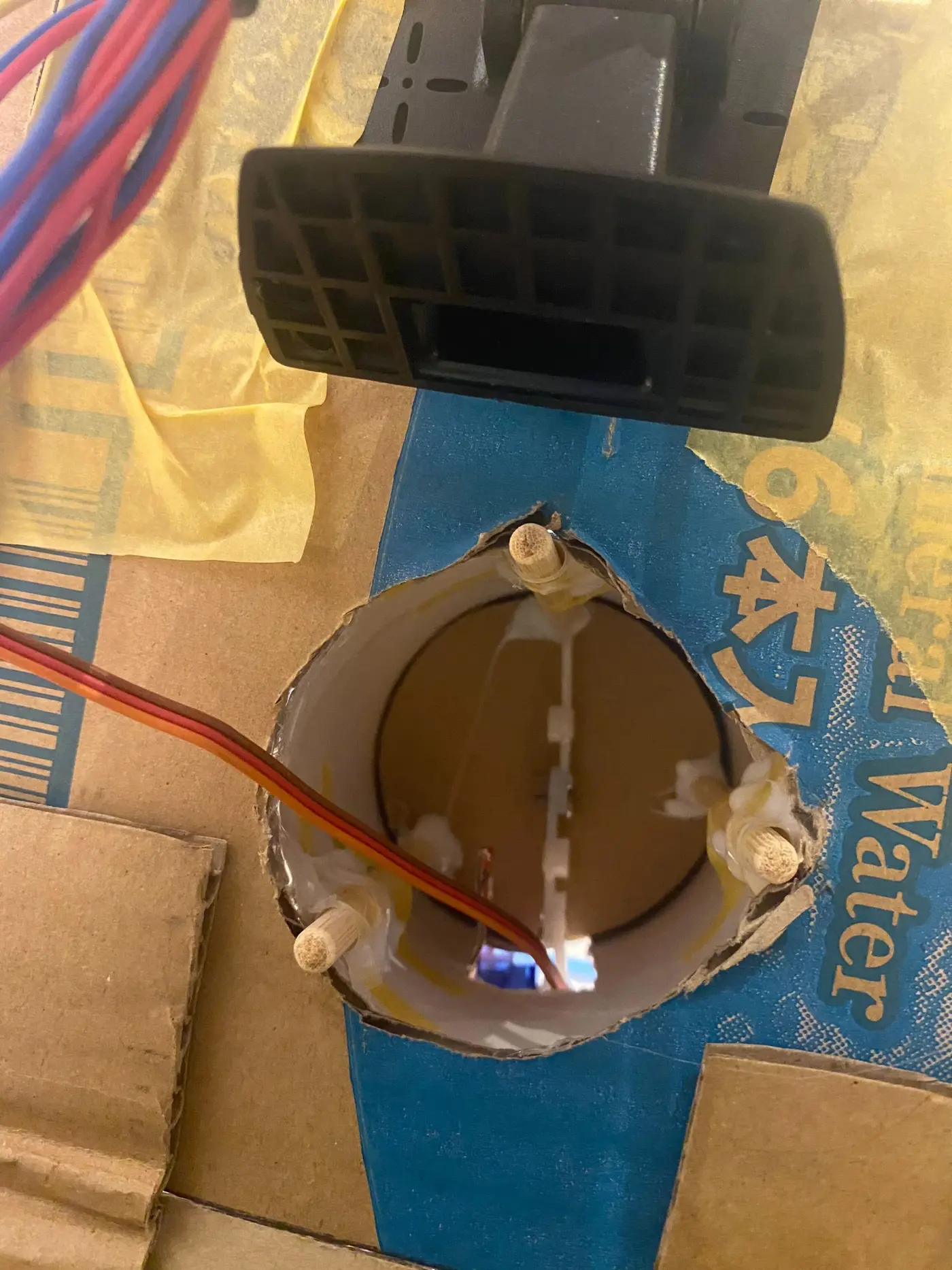
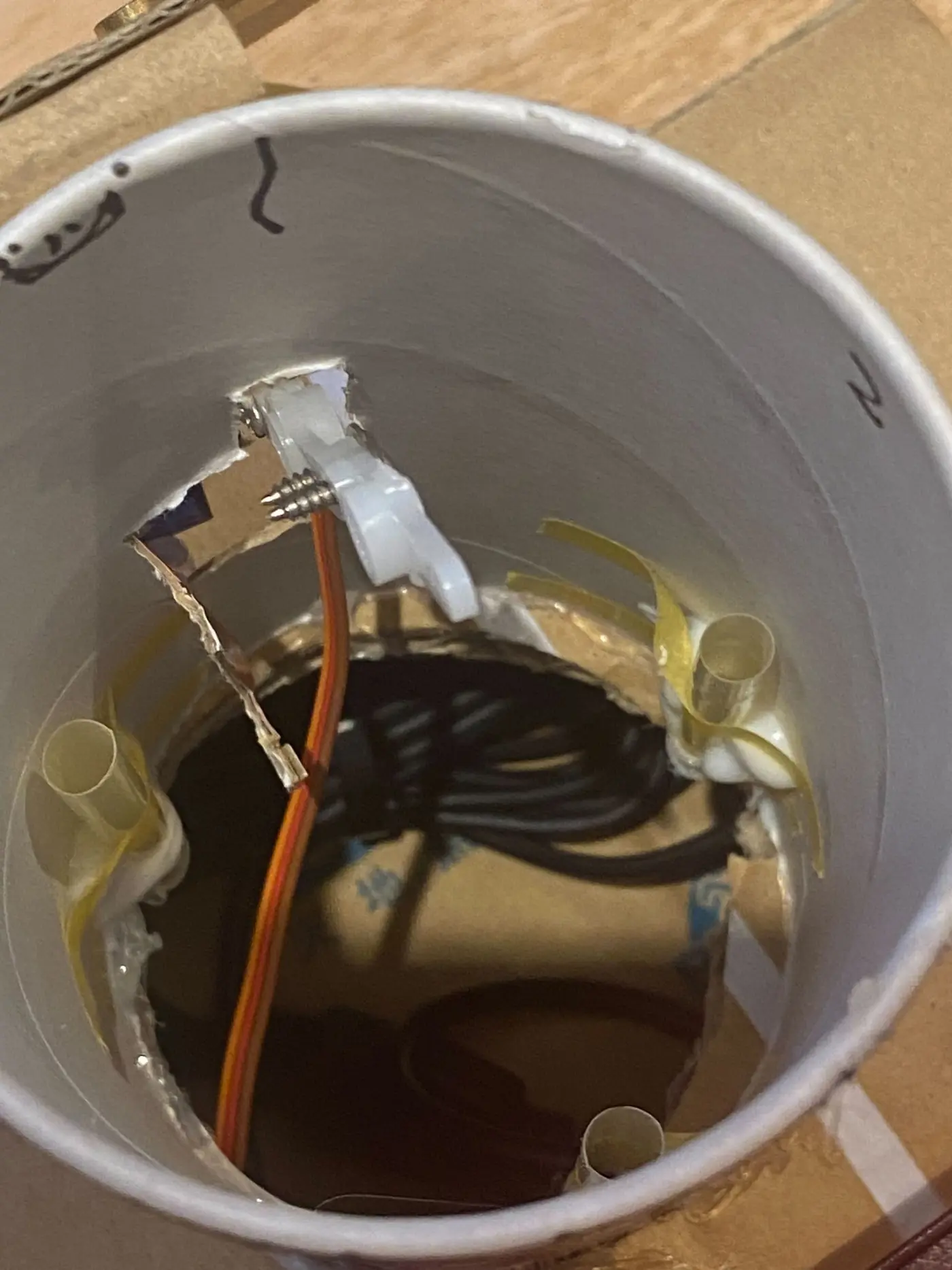
When the game was cleared, the figure that was supposed to pop out did not come straight out and got stuck inside the tube.
We thought a guide that moves up and down would help, so we tried one made from a straw and disposable chopsticks, and managed to get it to pop out properly.
 |  |  |
Bonus
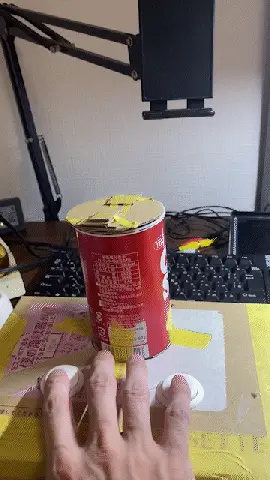
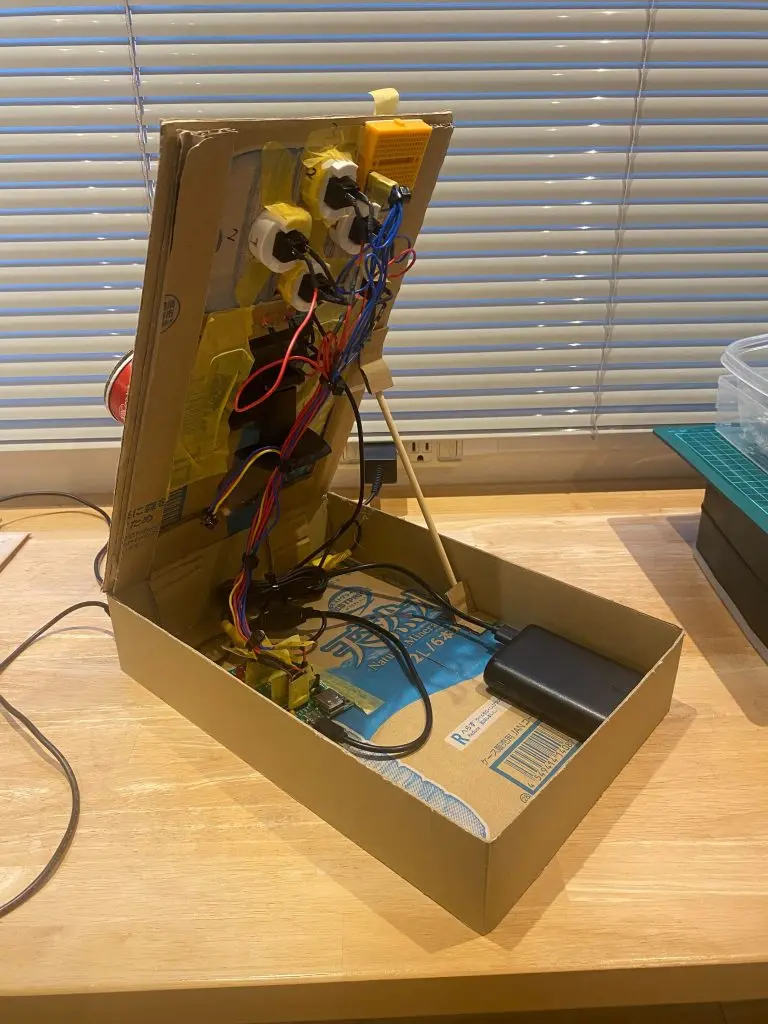
Here are the prototype of just the figure pop-out mechanism and the inside of the finished piece. To make maintenance easy, the inside can be opened and closed easily using a disposable chopstick, much like propping open a car's hood.
Final Thoughts
Through World Area Networks Co., Ltd.'s involvement in creating and maintaining programming teaching materials for elementary school students, I discovered the fun of moving things with programs and became interested in electronics projects, which led to this blog post. At first I did not understand programming at all, but as I worked through one problem after another, my knowledge grew, and I experienced the joy of turning ideas into reality.
I believe that gaining this kind of experience through programming education in elementary and junior high schools is a very valuable opportunity that will be useful in the future. We also want to create an environment where children can learn happily not only at school but also at home with their families, so WAN creates teaching materials that adults can learn from together with their children. We will share any further progress on our website and elsewhere.
And when I come up with new electronics project ideas, I plan to share them on the blog again. I hope you look forward to the next post.