- Home
- Works & Tech
- [Civil Engineering Construction Sites] A Guide to Introducing XR Equipment and Systems
[Civil Engineering Construction Sites] A Guide to Introducing XR Equipment and Systems
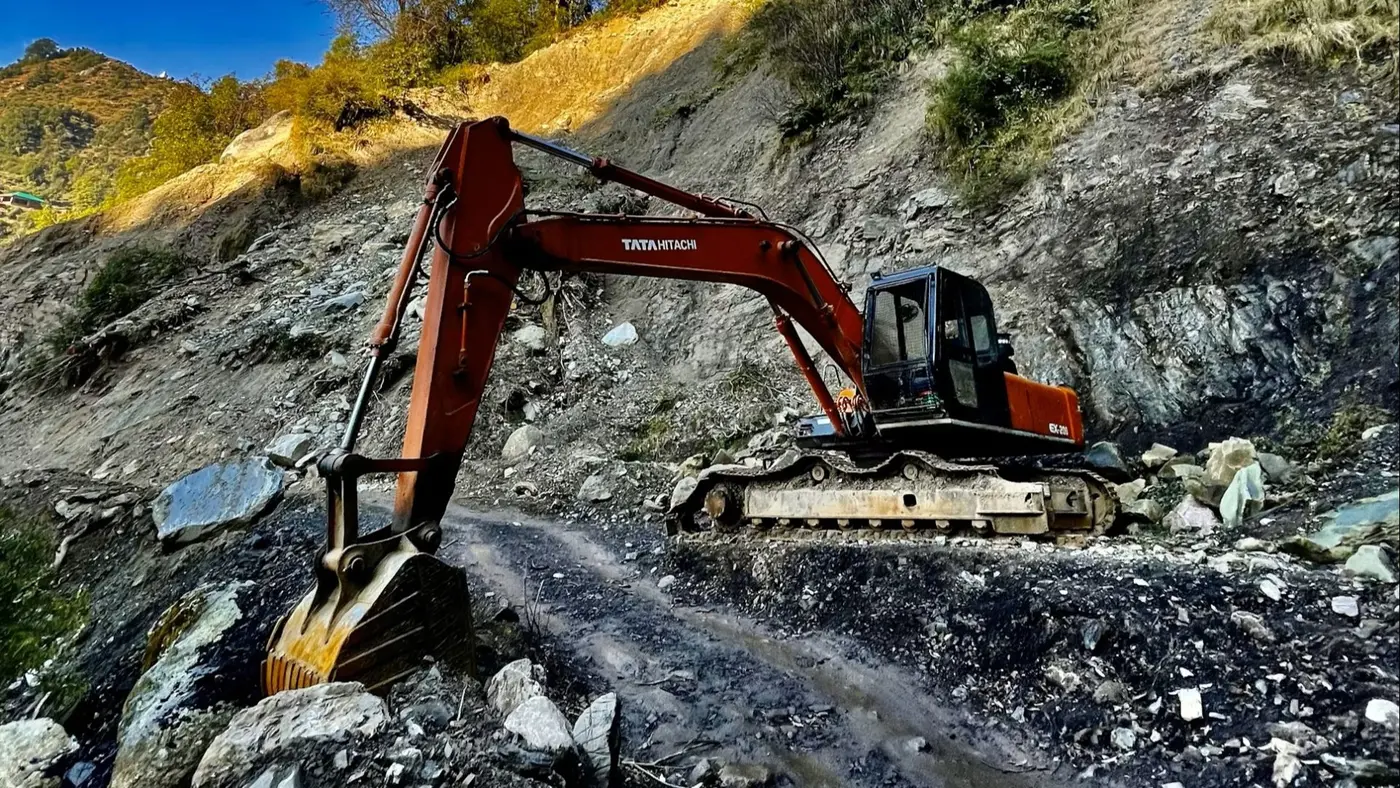
The construction and civil engineering industry is now at a major turning point. As it faces structural challenges such as the aging of skilled workers and a shortage of young workers, XR (cross reality) technology is attracting serious attention as a way to break through them.
AR (augmented reality), which overlays design drawings onto the actual site; VR (virtual reality), which enables construction training in virtual space; and MR (mixed reality), which enables interactive operation linked to real objects. XR technology, the collective term for these, is already being used at some advanced civil engineering construction sites and is steadily producing results.
Why XR is attracting attention, and the challenges facing the civil engineering industry
Why XR, and why now?
In Japan, where the declining birthrate and aging population are accelerating, skilled engineers in the construction industry are retiring one after another, making it difficult to secure personnel.
In addition, the push for digitalization has surged, with initiatives led by the Ministry of Land, Infrastructure, Transport and Tourism such as i-Construction and the mandatory adoption of BIM/CIM. Against this backdrop, there is demand for "highly efficient construction and management that does not rely on manpower."
Introducing XR technology can be a powerful solution within this trend.
Main uses of XR in civil engineering construction
- AR: Visualizing design drawings, piping routes, and more by overlaying them on the site
- VR: New-hire training, and hazard experience and simulation before construction
- MR: More efficient maintenance and inspection work, combined with remote guidance
What happens if you do not adopt XR?
If you put off adoption, the following business risks can become reality:
- Rework caused by mismatches between the site and the design
- Passing on skills to young workers depends on specific individuals, and personnel do not develop
- Being unable to meet "DX requirements" from prime contractors and clients, and losing business opportunities
In public infrastructure works in particular, it is expected that XR capability may become a "prerequisite" in some cases going forward.
Key points for using XR at civil engineering construction sites, and how to choose
Simply buying the latest equipment is not enough to make adoption a success. What matters is selection and operational design that fit your company's challenges and operating structure.
1. Clarify the purpose of use
First, be clear about what you will use it for.
- Checking against design drawings?
- Safety education?
- Remote support?
The equipment and functions required differ greatly by use.
2. Key points for selecting equipment (hardware)
| Purpose of use | Example recommended equipment |
|---|---|
| Design checking and on-site display | HoloLens 2, Magic Leap 2 |
| Training in virtual space | Meta Quest, HTC VIVE Pro |
| Durability for outdoor work | Dustproof and waterproof equipment with long battery life |
3. Integration with software
- BIM/CIM support: Check compatibility with 3D model data
- Cloud integration: Enable remote support and site sharing in real time
4. The full picture of adoption costs
It is essential to think not only about initial costs but in terms of TCO (total cost of ownership), including the following:
- Software usage fees and license fees
- Maintenance contracts
- Training and support structure
- Setting up the communications environment (Wi-Fi/5G, etc.)
5. Design a feedback loop
- Design a mechanism to collect feedback from the site from the very beginning
- XR adoption is not "install it once and you're done"; continuous improvement is a given
XR Implementation Support Case Study by World Area Networks Co., Ltd.
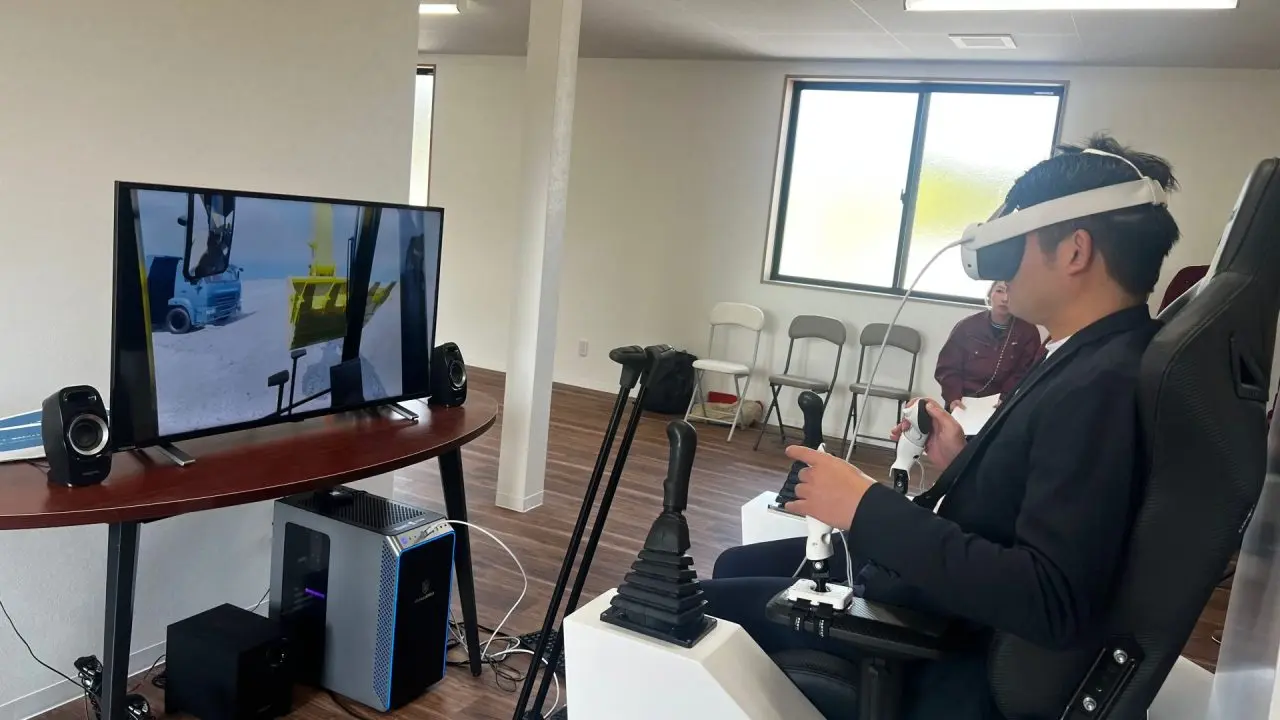
WAN is working on pilot deployments using XR technology with the aim of supporting human resource development in the construction industry. In particular, "experiential education" that combines visuals and movement is being introduced for heavy machinery that is difficult to operate.
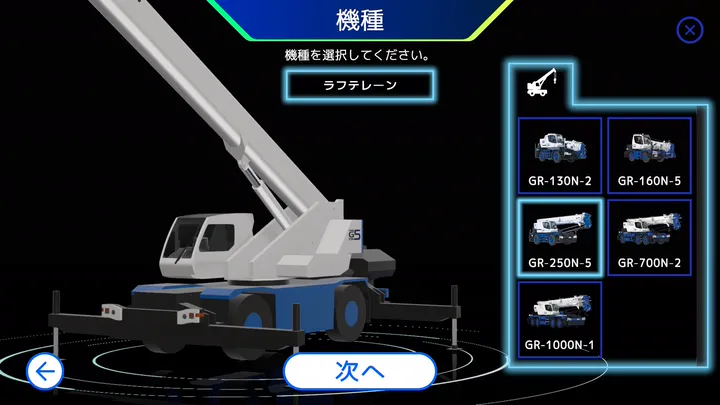
[Case study] METATORE Platform | XR pilot for heavy machinery operation training
Background challenge:
Operating the heavy machinery used at construction sites requires specialized skills, but for new workers, training on actual machines is a high hurdle, and there were challenges in terms of safety and training costs. A more efficient and safer training method was needed.
What we provided:
In the construction skills training program "METATORE Platform," WAN provided pilot support for heavy machinery operation training using XR technology. We recreated heavy machinery operating procedures in virtual space and provided educational content that lets trainees learn through a true-to-life experience.
- Trainees learn heavy machinery operating procedures and points of caution "physically," through visuals and movement
- As a step before on-site training with actual machines, we built a safe, repeatable practice environment
- Operating procedures are displayed in the learner's field of view, in a format that can be understood and imitated intuitively
Results:
- The psychological hurdle to operating the machines was lowered, and beginners became proficient faster
- Building a basic understanding before training on actual machines reduced the training burden on site
- A realistic learning experience became possible while keeping safety risks low
🔗 For details → https://wan-hiroshima.jp/works/metatorain2/
Points to note when adopting XR, and keys to success
Pitfalls in hardware selection
- High performance does not always mean the best fit
- Also consider resistance to actual site conditions (rain, wind, noise, dust)
The importance of software integration
- XR should not stand alone; it needs a design that can be integrated into existing workflows
- Software that takes a lot of effort for data conversion causes major losses in operation
Setting up training and manuals
- Even if the controls feel intuitive, initial training for the site is essential
- Preparing simple manuals with videos and diagrams is effective
Building a system for running PDCA
- Collect feedback after use across the organization, and review equipment and rules
- Fostering a "culture of using it" is the biggest factor for success
Summary
- XR delivers value in three areas: design, construction, and training
- The keys to adoption are "design based on on-site needs" and "continuous operational improvement"
- An adoption strategy that includes not only equipment selection but also operational design, training structure, and feedback structure is essential
- WAN also provides support based on a proven track record, so you can start a trial deployment with confidence
We're hosting the webinar "Transforming the Worksite! An In-Depth Look at XR Solutions for Construction, Civil Engineering, and Manufacturing" on May 29 (Thu)!
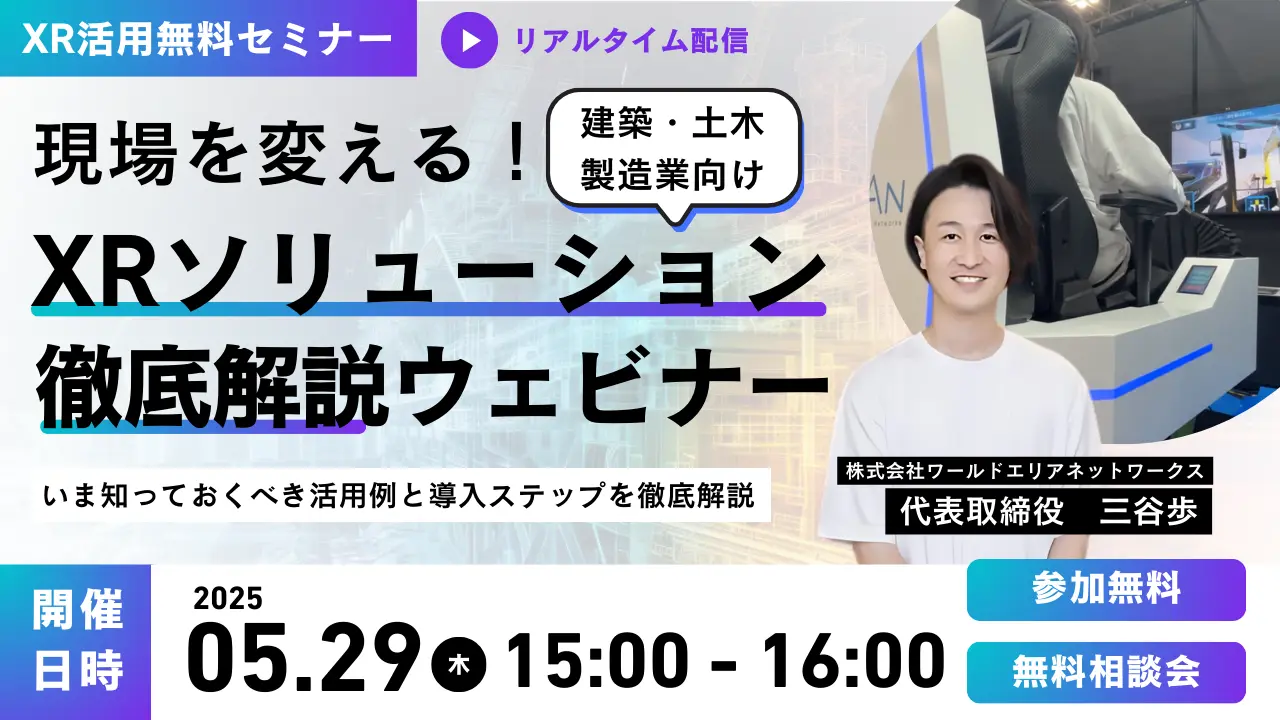
We will host the webinar "Transforming the Worksite! An In-Depth Look at XR Solutions for Construction, Civil Engineering, and Manufacturing" on May 29, 2025 (Thu), starting at 15:00!
This seminar offers an in-depth look at DX solutions that use XR technology, covering everything from "What are XR solutions?" to "Use cases currently being applied in the real world" and "An introduction to the latest solutions."
If you are considering DX using XR solutions, please take this opportunity to join us.
Schedule
• 14:55: Doors open
• 15:00: Webinar begins
• 15:30: Q&A and free consultation session
Recommended for
DX promotion managers in construction, civil engineering, and manufacturing who want to improve on-site safety and productivity
Staff in charge of HR development and safety education who want to strengthen training of younger workers and the passing on of skills
Those considering introducing simulation to reduce prototyping costs and lower risks
Those gathering information about XR solutions
Application form👉https://wan-hiroshima.jp/topics/webiner250501/
Consultations and document requests about adoption
WAN provides end-to-end support, from XR strategy planning and equipment and app selection to on-site deployment and training system design.
"We want to adopt XR, but we don't know where to start."
"We'd like to try it at just one site first."
If that sounds like you, start with our free adoption guide.
👉 For consultations and document requests, please contact us [here].