- Home
- Works & Tech
- For Manufacturers | A Proven Method for Skill Transfer Using 3DCG
Tech Articles3DCG
For Manufacturers | A Proven Method for Skill Transfer Using 3DCG

With skilled engineers aging and a shortage of young talent, skill transfer has become an urgent issue in the manufacturing industry. With traditional "learn by watching" OJT, it is difficult to pass on tacit knowledge, creating the risk that skills become dependent on specific individuals and that quality varies.
Against this backdrop, skill transfer using 3DCG (three-dimensional computer graphics) is attracting attention. 3DCG can visually represent complex work processes and product structures, enabling efficient training and information sharing.
In this article, we explain in detail a proven method for skill transfer using 3DCG, from the background of the challenges to specific ways to use it, implementation examples, and points to note.
Challenges and background of skill transfer
Aging and retirement of skilled engineers
In manufacturing, skilled engineers are aging, and the loss of skills through retirement has become a serious problem. According to a FY2025 survey by the Ministry of Health, Labour and Welfare, the average age of skilled workers in manufacturing has reached 58.7, making the transfer of skills to the next generation an urgent issue.
Shortage of young talent and difficulty of training
Securing young talent is difficult, and there are not enough people to inherit the skills. In addition, with OJT-based training, the quality of training depends on the teaching skills of the instructor, making it difficult to pass on skills uniformly. According to a survey by the Ministry of Economy, Trade and Industry, more than 60% (61.8%) of manufacturing companies answered that they "lack people capable of providing instruction."
Skills tied to individuals and left unstructured
In many cases, technical data is stored in individuals' notebooks or PCs and is not shared across the organization. As a result, skills become increasingly tied to specific individuals, and it becomes difficult for young employees to grasp the information they need.
Key points of skill transfer using 3DCG
Using 3DCG makes it possible to solve skill transfer challenges such as the following.
1. Visualizing work processes
Representing work processes visually with 3DCG allows complex procedures and movements to be understood intuitively. This speeds up learning for young employees and makes training more efficient.
<<Image (*example of work processes visualized with 3DCG)>>
2. Sharing tacit knowledge
By reproducing the tacit knowledge of skilled engineers, such as their intuition and experience, in 3DCG, even skills that are difficult to put into words can be shared. This prevents skills from becoming tied to individuals and can be expected to raise technical capabilities across the organization.
3. Reducing training costs
Once created, training content using 3DCG can be used again and again. This reduces the time and cost of training and enables efficient workforce development.

Success stories of using 3DCG
The potential for innovating skill transfer by introducing World Area Networks' "METATORE"
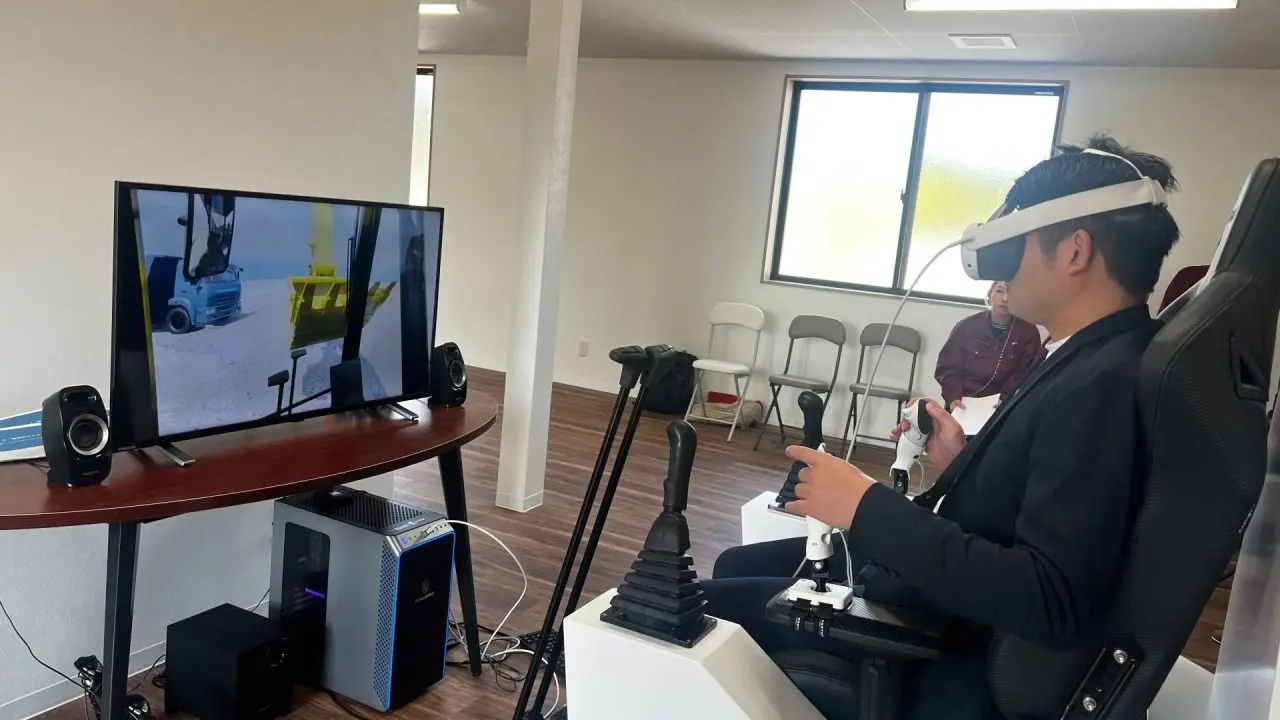
World Area Networks Co., Ltd. (WAN) is developing "METATORE," a training platform for the construction industry that uses VR and digital twin technology. content.technotree.com
On this platform, actual construction sites are 3D-scanned and construction processes are reproduced in a realistic virtual space. Workers can carry out practical training in a safe environment.
The platform also quantifies each worker's proficiency and provides individual feedback. Because proficiency in heavy machinery operation and construction accuracy can be evaluated in real time, efficient workforce development becomes possible.
In addition, workers at multiple sites can train simultaneously over the network, and the platform includes functions that let instructors monitor and guide them remotely.
In this way, WAN's "METATORE" is attracting attention as an innovative solution to the challenges of skill transfer in the construction industry.
Points to note when introducing and putting it into practice
When introducing skill transfer using 3DCG, keep the following points in mind.
1. Updating and managing content
As technologies and products change, 3DCG content also needs to be updated regularly. Reflecting the latest information ensures that training is always accurate.
2. Balancing implementation costs and benefits
Introducing 3DCG requires an initial investment, but when you consider the long-term reduction in training costs and improvements in quality, it is an effective investment. It is important to weigh the costs against the benefits before introduction.
3. Understanding and cooperation within the company
Understanding and cooperation within the company are essential for introducing new technology. Explaining it to and training the people involved, and sharing the benefits of using 3DCG, enables a smooth introduction.
Summary
- Skill transfer has become a challenge due to the aging of skilled engineers and a shortage of young talent.
- Using 3DCG makes it possible to visualize work processes and share tacit knowledge.
- Using 3DCG offers many benefits, such as reducing training costs and making quality more uniform.
- When introducing it, updating content, balancing costs and benefits, and understanding and cooperation within the company are important.
CTA (document downloads, free consultations, etc.)
At World Area Networks, experienced staff provide consistent support from planning to executing your skill transfer strategy. If you are struggling with issues such as a lack of resources for skill transfer, please consider using WAN's skill transfer support services.
For detailed consultations and free document downloads, please see the link below.