- Home
- Works & Tech
- A Digital Archive for the Future Through VR | VR Video Production Inside the Atomic Bomb Dome
A Digital Archive for the Future Through VR | VR Video Production Inside the Atomic Bomb Dome
Introduction
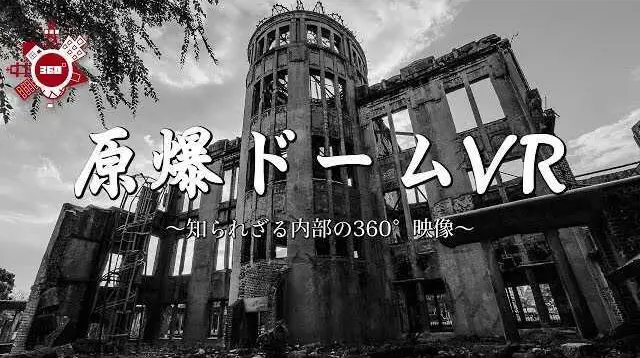
With today's technological progress, digitally preserving historical heritage and cultural assets and passing them on to the future is becoming increasingly important. In 2015, we at World Area Networks took on a project commissioned by the City of Hiroshima to film the inside of the Atomic Bomb Dome in VR video and preserve it as a digital archive. Drawing on this experience, we would like to talk about the importance of digital archives created with VR technology.
Watch the VR video we actually filmed and edited here
VR video production inside the Atomic Bomb Dome
In 2015, we produced VR video inside Hiroshima's Atomic Bomb Dome. In this project, we aimed to make full use of the latest VR technology to capture detailed footage of the dome's interior and preserve it as a digital archive. In 2015, products such as VR cameras were not yet available, so we built our own rig combining six GoPro cameras, filmed the interior of the dome, and produced it as 360° video. This footage has become an important record for protecting the historical value of the Atomic Bomb Dome and passing it on to future generations.
The importance of digital archives
The greatest advantage of digital archives is that they can preserve historical heritage without deterioration. Physical structures and materials can deteriorate and become damaged over time. By preserving them as digital archives, however, this heritage can be made accessible anytime, from anywhere, and passed on accurately to future generations.
New experiences through VR technology
By using VR technology, we can go beyond mere documentation and provide a more immersive experience. The VR video of the inside of the Atomic Bomb Dome lets viewers realistically feel the scene and atmosphere of the time. This helps people understand historical events more deeply and be moved by them.
Use in education and outreach
Digital archives are also extremely useful in education and outreach. Using VR video in school classes and exhibitions makes history more accessible to students and the general public. The VR video of the Atomic Bomb Dome is a highly valuable teaching resource for learning about Hiroshima's history and a means of conveying the horrors of war and the importance of peace to many people.
Conclusion
World Area Networks has been producing VR content since the early days of VR, and has continued to create VR and XR content that incorporates new technologies as the times have changed.
The VR video we produced inside the Atomic Bomb Dome in 2015 is still rough by today's quality standards, but it used the latest technology of the time and made us keenly aware of the importance of digitally archiving historical heritage.
Digital archives are a means of preserving history in a form that prevents physical deterioration and can be accessed anytime, from anywhere. Using VR technology in particular provides an immersive experience that goes beyond mere documentation and helps people understand historical events more deeply.
World Area Networks will continue to make full use of the latest technology to create digital archives that pass valuable historical heritage on to the future. Our mission is to recognize the importance of digital archives and to keep innovating technologically, so that we can pass valuable history on to the next generation.