- Home
- Works & Tech
- The Future of Tourism x Digital Content | Redefining Spatial Experiences and the Innovative Power of Technology in Regional Revitalization
The Future of Tourism x Digital Content | Redefining Spatial Experiences and the Innovative Power of Technology in Regional Revitalization
As the tourism industry moves beyond the "servicization of industry" and into the "redesign of experiences," technology is playing a bigger role than ever before.
Generative AI, spatial computing, IoT, digital twins: these technologies, once the stuff of science fiction, are already beginning to enable the reconstruction of experiential value and data-driven design of the tourism economy on the front lines of regional tourism.
In this article, we take a deep dive into which technology approaches are needed now and in the future to address the structural challenges of the tourism industry, looking at where cutting-edge technologies can be applied and the key issues at the implementation stage.
Contents
- Why the tourism industry needs technology
- Digitally transforming "regional experiences": five cutting-edge technology approaches
- A World Area Networks case study: Onomichi x spatial design DX
- The importance of "UX x DX x CX" design in implementation
- Combining technology and human capital to shape the future of tourist destinations
- Summary
Why the Tourism Industry Needs Technology
Both in Japan and abroad, tourism is being redefined as "an experience industry that involves moving through space." Beyond simply attracting visitors and running facilities more efficiently, it has become essential to take the perspective of "optimizing cities and regions themselves as a UI/UX."
Behind this lie the following structural challenges.
- Changing experiential values from Gen Z onward For them, "travel" is not "consumption" but "a means of self-expression." Value centers on experiences that look great through a camera and on the "context" that resonates on social media.
- Population decline and the need for spatial optimization Rather than expanding infrastructure, the question is how efficiently limited resources and people can be converted into "experiential value."
- Breaking away from dependence on analog The traditional tourism model that relies on posters, pamphlets, and information centers is inefficient and hard to measure. Turning information into data is the first step toward an economic strategy.
Digitally Transforming "Regional Experiences": Five Cutting-Edge Technology Approaches
Below, we introduce "five groups of advanced technologies" that are already being adopted in tourism projects in Japan and overseas, and outline the feasibility of implementing each and its impact on the region.
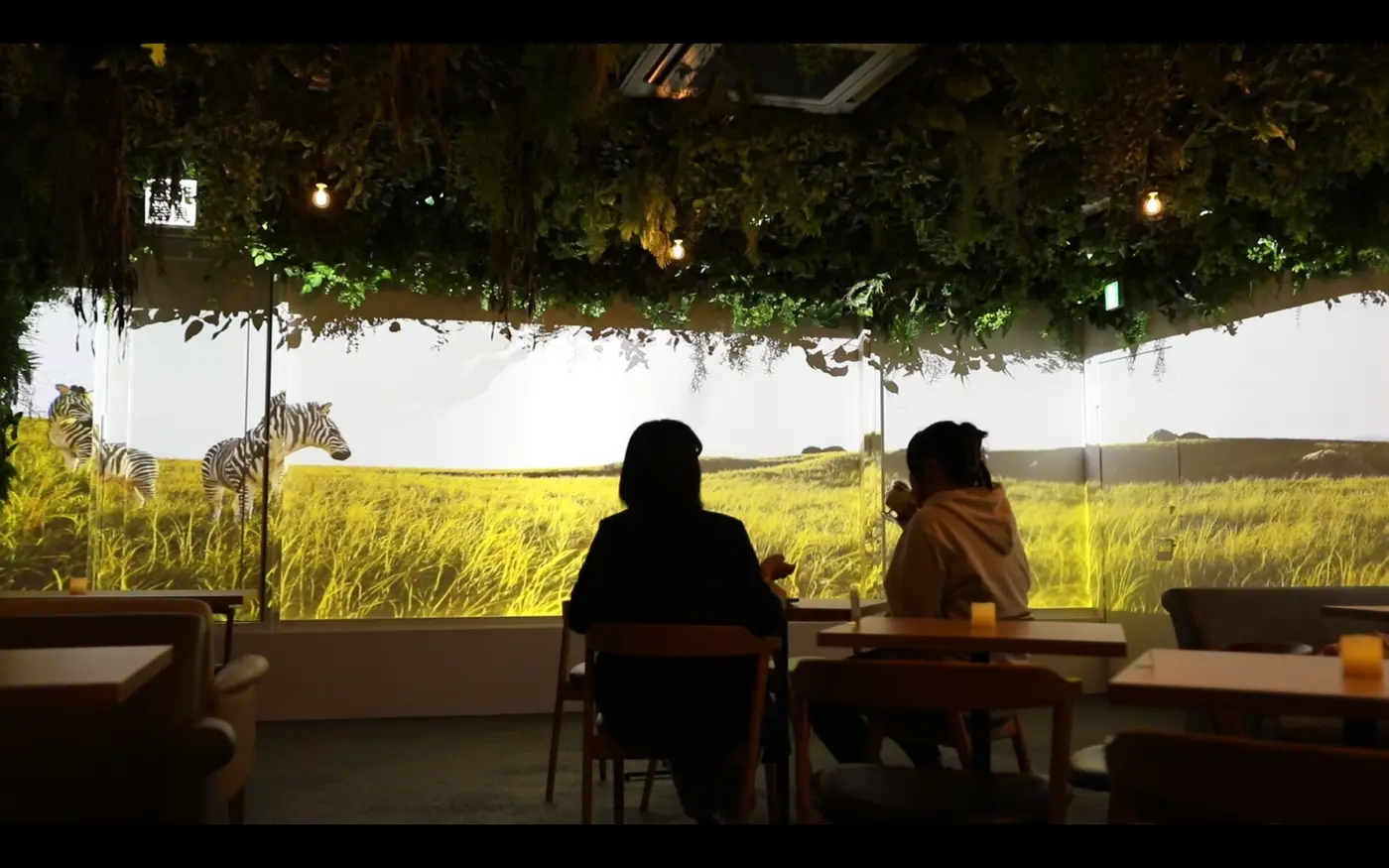
① Spatial Computing + AR Cloud
Spatial computing is technology that integrates and reconstructs real and digital spaces "in real time."
- Tour experiences with AR glasses
- "Personalized tourism" with AI guides
- Real-time projection of old maps and historical scenery
Efforts to turn the city itself into a UI are likely to expand at an accelerating pace with the arrival of devices such as Apple Vision Pro.
② IoT and Beacons x Digital Twins
By installing sensors and beacons throughout tourist areas, real-time foot traffic and behavioral data can be visualized on a digital twin. This technology makes the following possible.
- Congestion forecasting and crowd flow control
- AI-suggested routes that avoid crowds
- Collecting behavior logs inside facilities → UX improvement
③ AI Content Generation x Narrative Engines
Generative AI has the power to reconstruct a region's history and culture as "stories."
- Multilingual interactive story guides
- Tourism experiences with GPT-based character guides
- Stronger storytelling through social media integration (generating UGC)
④ Web3 and NFTs x Tourism Economics
Web3/NFTs are attracting attention as technologies that digitally guarantee the "ownership experience" in tourism.
- Proving travel records with NFTs
- Incentive NFTs that work like a local currency (such as art exclusive to hotel guests)
- Co-creation models for residents and tourists through DAOs
⑤ Data Integration Platforms for LTV and CX Optimization
Turning tourists from "one-time visitors" into "repeat visitors" and "advocates" requires designing for LTV (customer lifetime value) and optimizing the customer experience (CX).
- Integrated management of complete behavior histories across lodging, transportation, dining, and activities
- AI-driven recommendations by segment
- Countermeasures through UX design at drop-off points
A World Area Networks Case Study: Onomichi x Spatial Design DX
At WAN, we carried out an "interactive map project that lets people re-experience the old town" in Onomichi City, Hiroshima Prefecture.
Features of the Onomichi Project
- A smart tourism map with multilingual support, GPS, and audio guides
- AI classification and recommendation of stories collected from local residents
- Visualizing walking routes with AR → 20% increase in time spent in the area
This can be seen as an early model of spatial-experience DX that redesigns the entire town as an "information space," and a case that demonstrated the potential for connecting tourism promotion with the local economy.
(Related article link: detailed case study of the Onomichi City digital map)
The Importance of "UX x DX x CX" Design in Implementation
Introducing technology is only a means to an end. What matters most is the perspective of designing "user experience (UX)," "digital design (DX)," and "customer value (CX)" at the same time.
Common Failures
- "Apps nobody uses": the technology is there, but the UI/UX is unfriendly
- "Maps that never get updated": they become outdated because no operating structure is in place
- "Value that can't be measured": KPIs and data integration were never designed
From the earliest stage of adoption, integrated design combining design thinking, data engineering, and local culture is essential.
Combining Technology and Human Capital to Shape the Future of Tourist Destinations
Technology is ultimately a means of "empowerment." Digital tools only come to life when they build on the passion, history, and everyday beauty of local residents and tourism businesses.
- Designing for resident participation (co-creation)
- Digital education programs for tourism workers
- Co-creation with outside creators (open-lab-style operation)
The future of sustainable tourism DX is "a system in which the region and technology evolve together."
Summary | An Era of Re-Editing Regional Stories with Technology
- Tourism has entered the era of "spatial experience x data design"
- Advanced technologies such as spatial computing, IoT, AI, and NFTs are redefining tourism experiences
- The key to success is integrated "UX x DX x CX" design
- WAN is providing support in various regions as a bridge between technology and local culture
Why Not Redesign Your Region's Potential Together with Technology?
WAN provides end-to-end support, from tourism strategy planning to implementation of advanced technologies, content design, and operation.
If you face challenges such as "We want to update the information design of our tourist destination" or "We want to introduce digital initiatives but don't know how to proceed," please consider our "Regional Tourism Digital Support Service."
For consultations and brochure requests, please see the link below!