- Home
- Works & Tech
- [Construction and Civil Engineering Sites] How Virtual Simulators Can Advance Technical and Safety Training
Tech ArticlesSimulationXR
[Construction and Civil Engineering Sites] How Virtual Simulators Can Advance Technical and Safety Training
In recent years, the construction and civil engineering industries have faced labor shortages and an aging workforce, making the approach to technical and safety training a major challenge. In particular, the difficulty of preparing workers to handle hazardous tasks on site and of passing skills on to new employees has become apparent, and a key question is "how to build a training system that is efficient, precise, and learnable by anyone."
Against this backdrop, next-generation technical training using VR and AR with "virtual simulators" has been attracting attention. Combined with "digital twin" technology, which realistically reproduces the actual site environment, it is expected to maximize the effectiveness of training.
- What are the challenges of technical and safety training at construction and civil engineering sites?
- Solutions and key points for adopting virtual simulators
- We held a trial session for "METATORE," our latest excavator simulator
- Cautions and operational tips for adoption and practice
- Summary
What are the challenges of technical and safety training at construction and civil engineering sites?
Construction and civil engineering involve many hazardous tasks every day, and the following kinds of training are needed.
- Basic training and OJT (on-the-job training) for new workers
- Implementing and establishing hazard prediction (KY) activities
- Repeated training that simulates actual work
- Annual training and retraining
However, this training comes with the following challenges.
Training that depends on individuals and varies in quality
Because training content depends on the skills and experience of site leaders, the quality and depth of what is taught tends to be uneven.
The risks and costs of training on real machines
Training with real machines, such as crane operation or work at heights, requires expensive equipment and carries the risk of accidents.
Limited by time and place
When there are multiple sites, gathering everyone in one location for training takes a great deal of cost and effort.
For these reasons, the need for "safety training that is safer, more consistent, and more flexible" is growing.
Solutions and key points for adopting virtual simulators
Training in virtual spaces using "virtual simulators" is attracting attention as a way to fundamentally solve these challenges.
What is a virtual simulator?
A virtual simulator is a training method that uses VR (virtual reality) or AR (augmented reality) to reproduce work experiences in a virtual space. By linking it with a "digital twin" that reproduces the site's environment, equipment, and processes as they are, training can come extremely close to actual work.
● Immersive training through realistic VR experiences
Virtually experiencing work at heights or heavy machinery operation realistically reproduces the tension and judgment involved. It is also effective for developing emergency response skills.
● Participation from remote locations
With just an internet connection, the same training is available from anywhere in the country. This is especially effective for companies with regional branches.
● Recording and analyzing training logs
Training history is recorded automatically, visualizing each person's level of understanding and areas for improvement. This allows the quality of training to be improved continuously.
● Reduced training costs
Because training can be done without real machines or sites, advanced training is possible while keeping equipment investment and labor costs down.
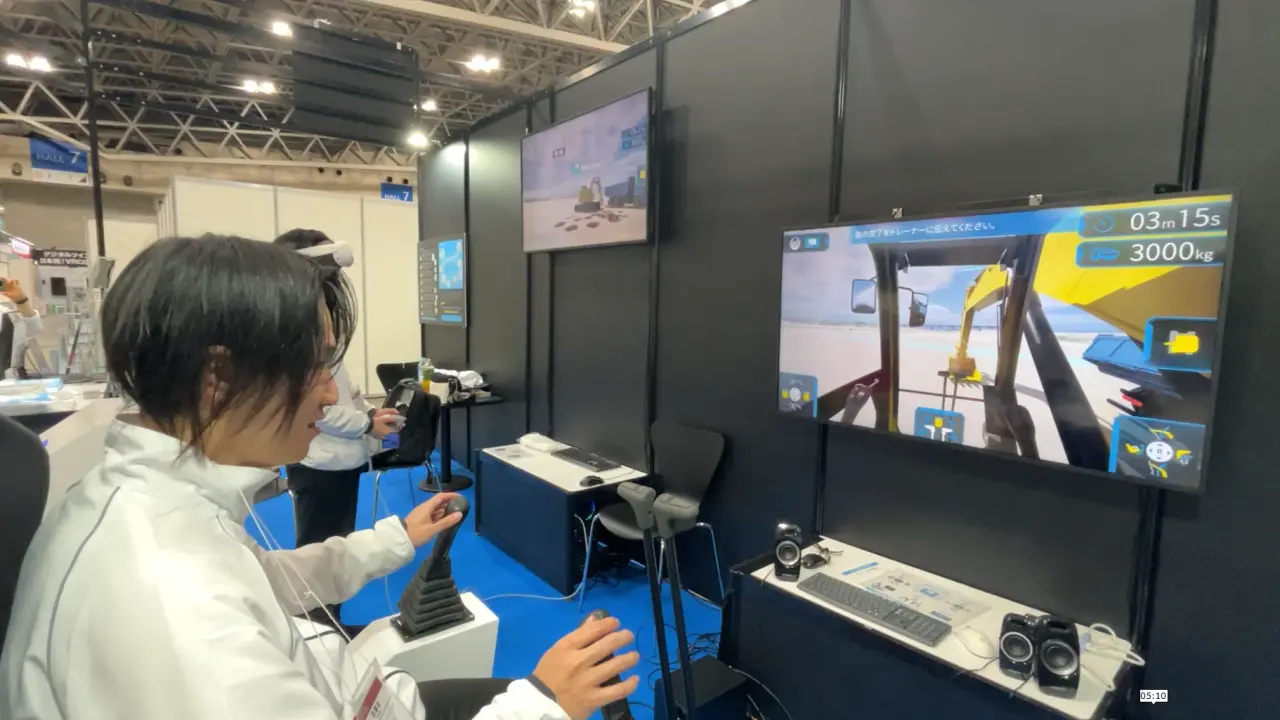
We held a trial session for "METATORE," our latest excavator simulator
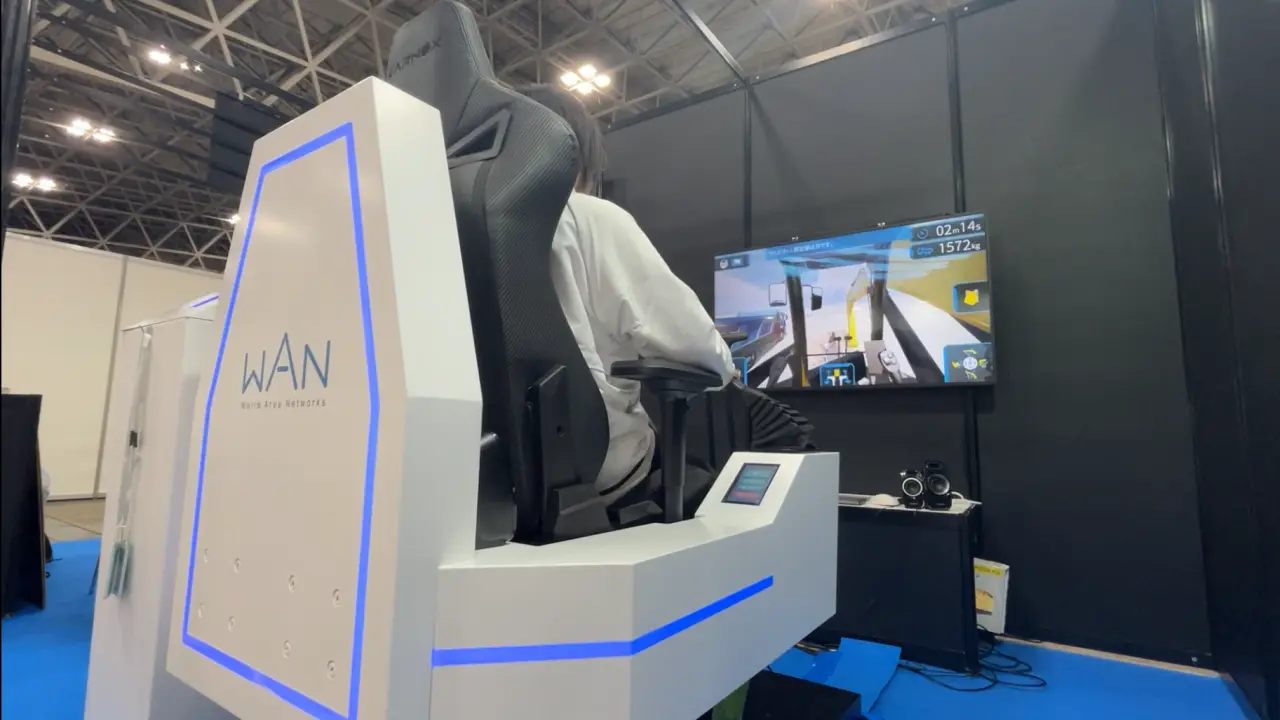
In February 2025, we invited two construction companies to a trial session for the virtual simulator "METATORE."
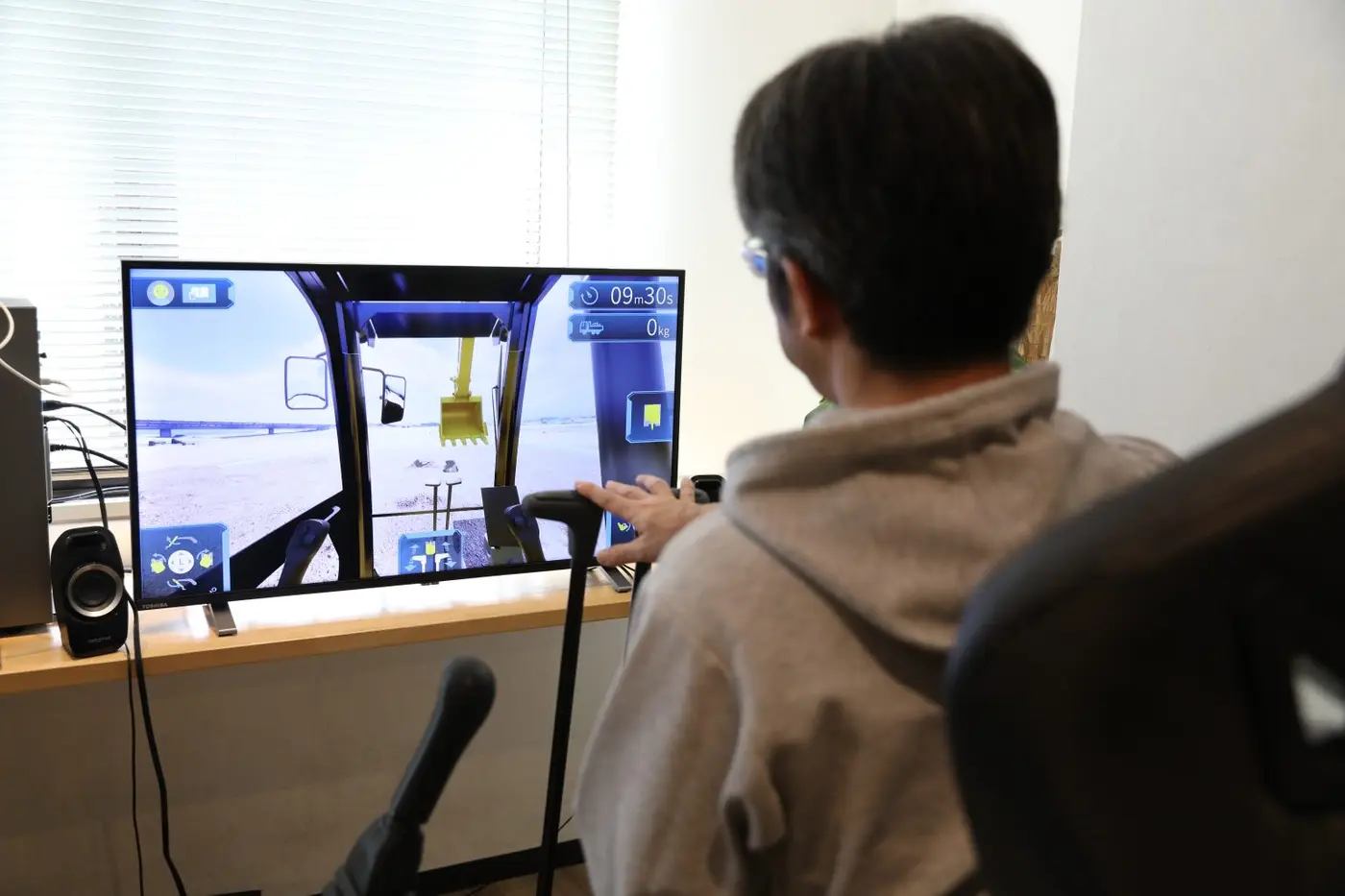
We explained the system overview and the benefits of adoption. Participants also got into the simulator themselves for a realistic operating experience, just like being on site.
Participating companies told us:
"The simulator's quality is high; it felt as realistic as operating the real machine."
"Even in VR, you get a real sense of being on site. It's a very effective training tool."
"It looks like we could start using it right away to train our actual workers."
👉 Details here: MetaTrain trial session (WAN case study)
These are some of the comments we received.
Cautions and operational tips for adoption and practice
The keys to successfully adopting virtual simulators are the following points.
● Customized design suited to the site
Rather than one-size-fits-all content, customization tailored to the site's work processes and risk characteristics is essential. Using digital twin technology to build environments that closely match reality is important.
● Balancing initial cost and ROI
The cost of adoption is not low, but by considering use across multiple departments and long-term workforce development costs, you can clarify the return on investment.
● Operating assistance and support during initial adoption
Providing tutorials and introductory sessions for workers unfamiliar with the equipment improves how well the training takes hold.
● Regular content updates
A system for regularly reviewing training content is also essential to keep up with changes in laws and work procedures.
Summary
- Construction and civil engineering sites face many challenges in safety training, including dependence on individuals, cost, and location constraints
- Virtual simulators use VR/AR technology and digital twins to make training more efficient and consistent
- The keys to success are suitability for the site and building an adoption framework
- Digital transformation (DX) of training makes it possible to achieve both accident prevention and workforce development
Now recruiting early development partners! – Limited to 5 companies
We are currently recruiting early development partners for the excavator simulator, limited to 5 companies.
Benefits for early development partners
- One-time purchase of the custom-developed version
- Free provision of the proficiency management function (METATORE Platform)
- Special pricing when the product version is released
- Promotional support for your company (featured on our website and at exhibitions)
For specific terms and contract details, please feel free to contact us.
Notes on the product version release
- We are aiming to release the product version in 2026, but we cannot guarantee this.
- We therefore ask that you consider delivery of the custom-developed version as the primary objective.
How to inquire and apply
Companies interested in participating as early development partners are welcome to contact us using the details below.
We look forward to working with you!