- Home
- Works & Tech
- For Cultural Facilities: A Step-by-Step Guide to Introducing Projection Mapping
Tech ArticlesFilm
For Cultural Facilities: A Step-by-Step Guide to Introducing Projection Mapping
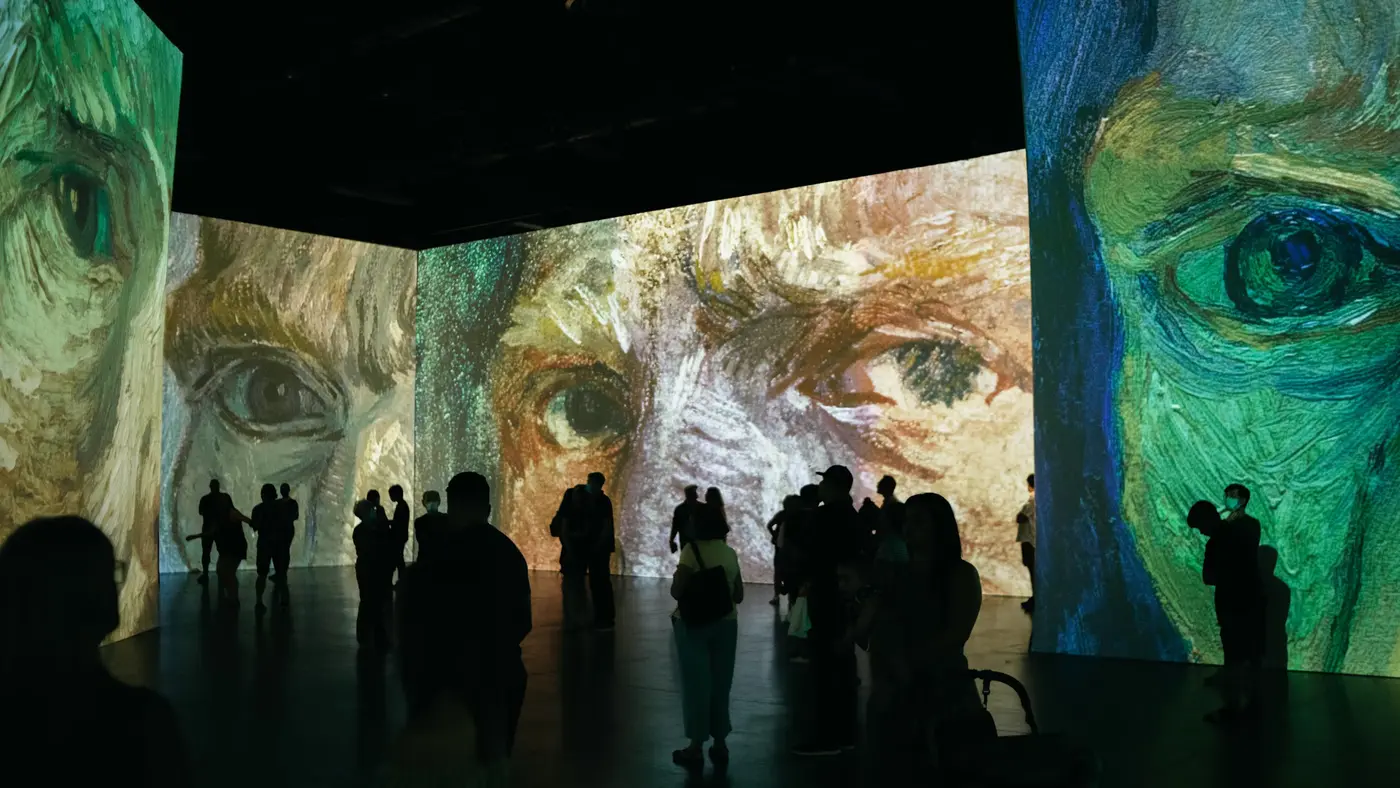
Projection mapping has been attracting attention in recent years as a way to enhance the visitor experience. It is increasingly being introduced at cultural facilities such as museums, art museums, archives, and historic buildings, where it is used to breathe new life into conventional exhibits.
However, introducing it requires specialized knowledge, equipment, and an appropriate operating structure, and many people in charge may not know where to start.
In this article, we explain the steps for cultural facilities to introduce projection mapping in a clear, step-by-step manner. We cover everything from the basic flow to planning and design, implementation, and key points after launch.
- Why adoption is growing and the challenges facilities face
- Steps to introduction and keys to success
- Lessons on process and results from an actual case
- Points to note and how to avoid trouble during introduction and operation
- Summary
Why adoption is growing and the challenges facilities face
What is projection mapping?
Projection mapping is a technology that projects video onto the walls of buildings or into interior spaces to create visually striking presentations. By synchronizing it with sound and lighting, it can offer an immersive spatial experience.
Why is it attracting attention at cultural facilities?
There are several reasons why the introduction of projection mapping at cultural facilities is attracting attention:
- Increasing visitor numbers and encouraging visitors to explore: Its strong visual impact and high affinity with social media are expected to attract young people and tourists.
- Making exhibits more appealing: It can add movement and narrative to static exhibits, promoting understanding and leaving a stronger impression.
- Balancing preservation and presentation: It can create new value without physically altering the real objects, such as Important Cultural Properties.
Challenges in introducing it
On the other hand, many facilities face challenges such as the following:
- A lack of technical knowledge and staff
- Difficulty predicting cost-effectiveness
- Concerns about the operational burden after the equipment is installed
To overcome these challenges, clear objectives and a step-by-step introduction process are essential.
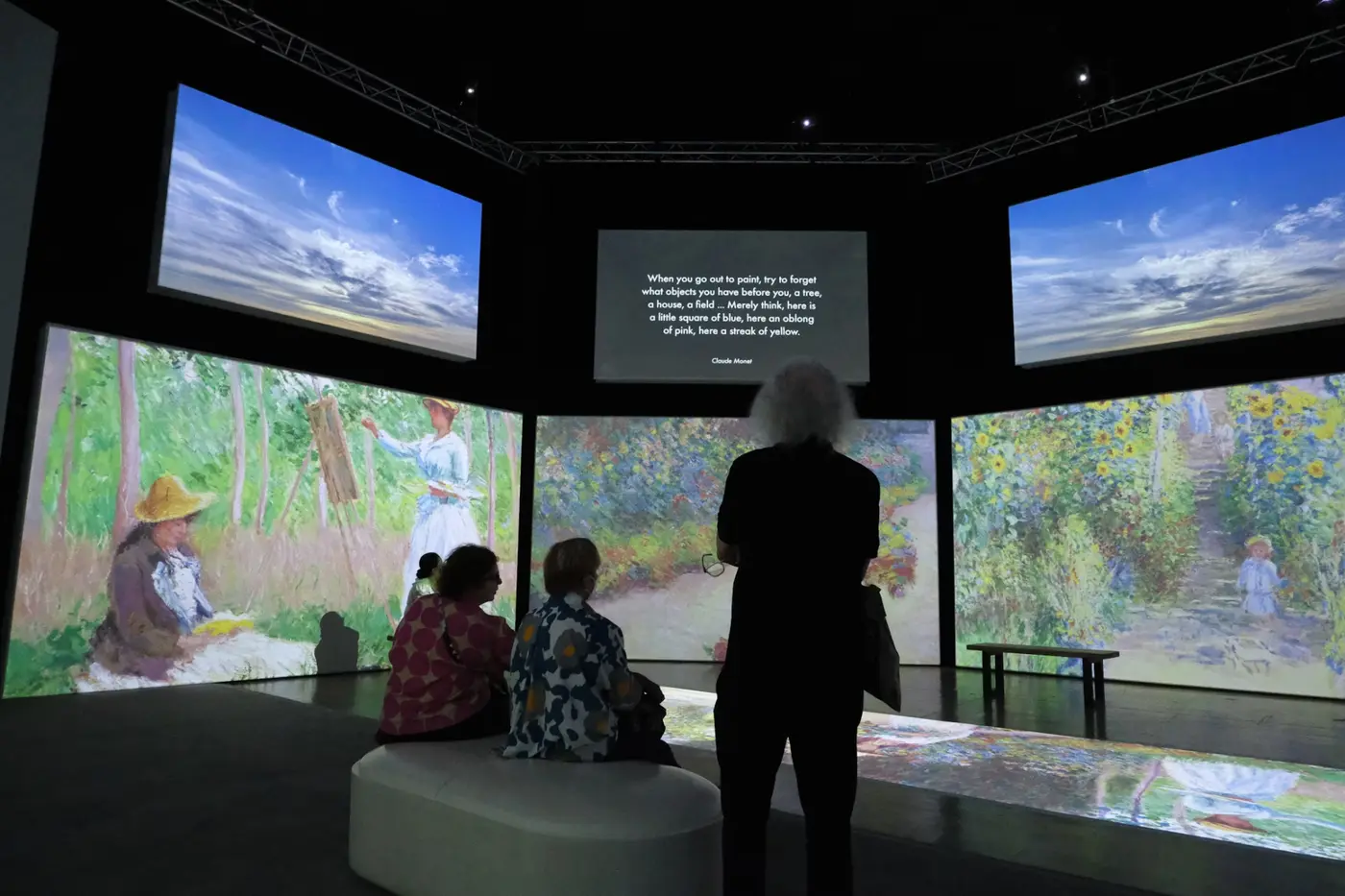
Steps to introduction and keys to success
Step 1: Clarify the purpose of introduction
- Clarify your objectives, such as increasing visitor numbers, enhancing educational impact, or promoting nighttime use.
- Setting KPIs (key performance indicators) makes it easier to evaluate the initiative.
Step 2: Check and survey the venue
- Survey the building structure, projection distance, and surrounding environment (lighting and sound).
- Resolve matters such as legal regulations and copyright in advance.
Step 3: Plan and design the content
- Incorporate storytelling to express the facility's appeal and history.
- Emphasize the connection with the exhibits and the space.
Step 4: Select equipment and design the system
- Consider projector brightness (lumens), installation positions, and sound and lighting equipment.
- If necessary, consider all-weather equipment as well.
Step 5: Production, testing, and launch
- Work with the production company and repeat test screenings and adjustments to refine the quality.
- Train staff before opening to the public.
Step 6: Build an operating structure and carry out publicity
- Prepare manuals and an organizational structure so that operations can continue over time.
- Use social media and press releases to generate buzz.
Lessons on process and results from an actual case
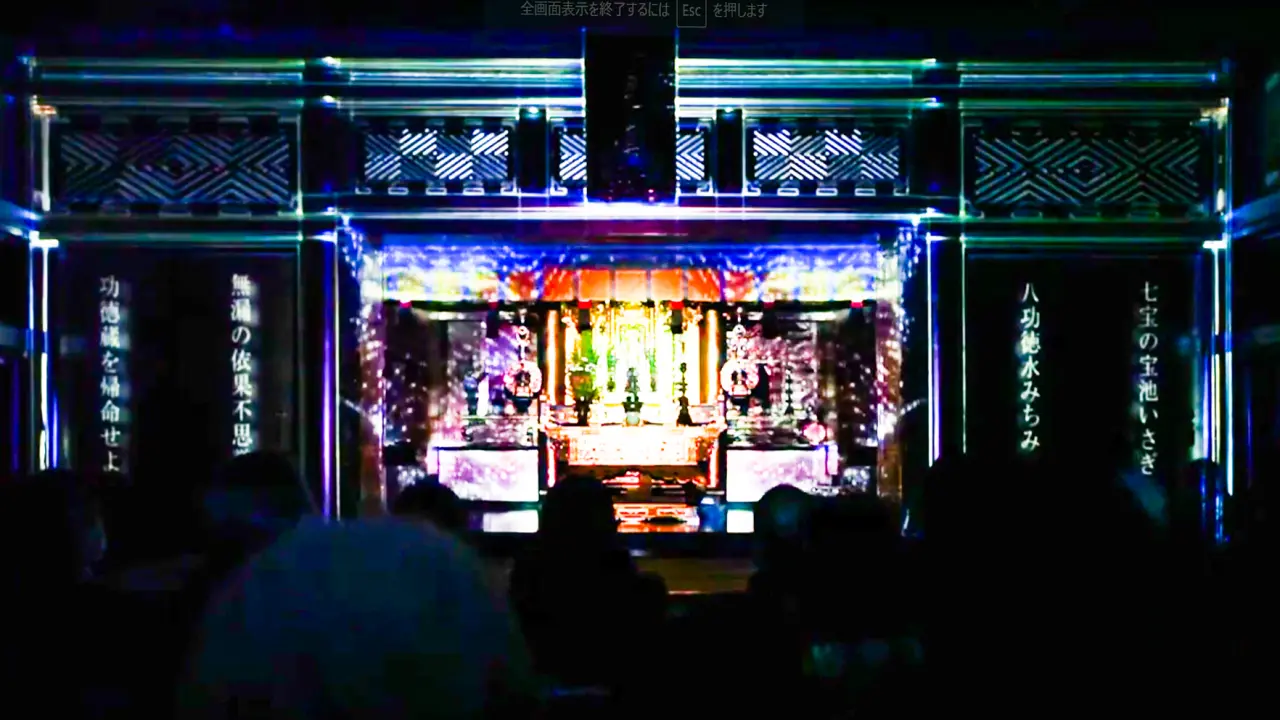
Case study: "DIG Nembutsu project2016" at Hongwanji Hiroshima Betsuin
For "DIG Nembutsu project2016," held at Hongwanji Hiroshima Betsuin in Hiroshima City, we took on a special projection mapping project, using the magnificent architecture of the main hall as a stage for a one-night-only video show where tradition and innovation intersected.
Challenges
- Reinterpret a traditional religious event through modern technology and appeal to a wide range of age groups
- Incorporate hands-on elements that allow participants to engage actively
Solutions
- Precisely measured the architectural structure of the main hall and produced video that fit even the smallest details of the building
- Introduced an interactive system in which, when all participants chanted the nembutsu together, the video changed in real time according to the rhythm and volume of the chanting
Results
- By fusing the traditional chanting of the nembutsu with the latest technology, the religious event was reinterpreted as modern entertainment and was highly praised by people of all ages
- Provided an experience in which participants created the video together as one, generating deep immersion and emotion
Reference link:
A Fusion of History, Culture, and Technology | Projection Mapping at a Temple – World Area Networks Co., Ltd.
Points to note and how to avoid trouble during introduction and operation
Check copyrights and portrait rights
When turning historical materials or images of people into video, you need to give careful consideration to copyrights and portrait rights.
Protecting the building and ensuring safety
Especially for facilities that are cultural properties or Registered Tangible Cultural Properties, attention must be paid to the effects of lighting and projection.
Estimating the budget and ROI (return on investment)
Make a plan that accounts not only for the cost of video production and equipment but also for operating personnel costs and publicity costs.
Dealing with operational trouble
It is also important to prepare for unexpected trouble, for example through regular inspections and backup systems.
Summary
- Projection mapping is a powerful way to enhance the visitor experience at cultural facilities
- For a successful introduction, it is important to carefully follow the steps of clarifying objectives, surveying the site, design and production, and operation
- Working with a specialist partner greatly increases the chances of success
- Copyright, safety measures, and a sustainable operating structure also need attention
- The key is a design that turns results into repeat visits and buzz
At WAN, our experienced staff provide end-to-end support for projection mapping, from strategy planning to execution. If you lack resources for video presentation or have concerns about introducing projection mapping, please consider our introduction support services.