- Home
- Works & Tech
- Latest Research on XR Adoption Rates and Effectiveness in Education
Latest Research on XR Adoption Rates and Effectiveness in Education

In recent years, the adoption of XR (Extended Reality: immersive technologies including VR, AR and MR) has been accelerating in corporate workforce development and job training. By enabling "experiential learning" and "zero-risk practice environments" that were difficult to achieve with conventional classroom learning and OJT, XR is being implemented across a wide range of industries, from manufacturing to retail, logistics and healthcare.
In this article, we analyze the latest trends in XR adoption in education and training, and its effectiveness, from multiple angles. Based on the latest survey data, we take a deep dive into the effects of adoption, use cases, and the challenges faced during implementation and how to address them.
The current state of and background to XR adoption in business
Behind companies' adoption of XR are clear needs such as "eliminating dependence on specific individuals," "quantifying skills" and "dramatically improving training efficiency."
According to an international survey conducted in 2024, 84% of companies have adopted XR technology in some form, or are considering or evaluating its adoption. The following areas are attracting particular attention:
- Training: 36%
- Collaboration support: 30%
- Improving customer experience: 26%
The following results have been reported as benefits of these deployments:
- Improved productivity: 36%
- Improved work quality: 33%
- Improved employee engagement: 32%
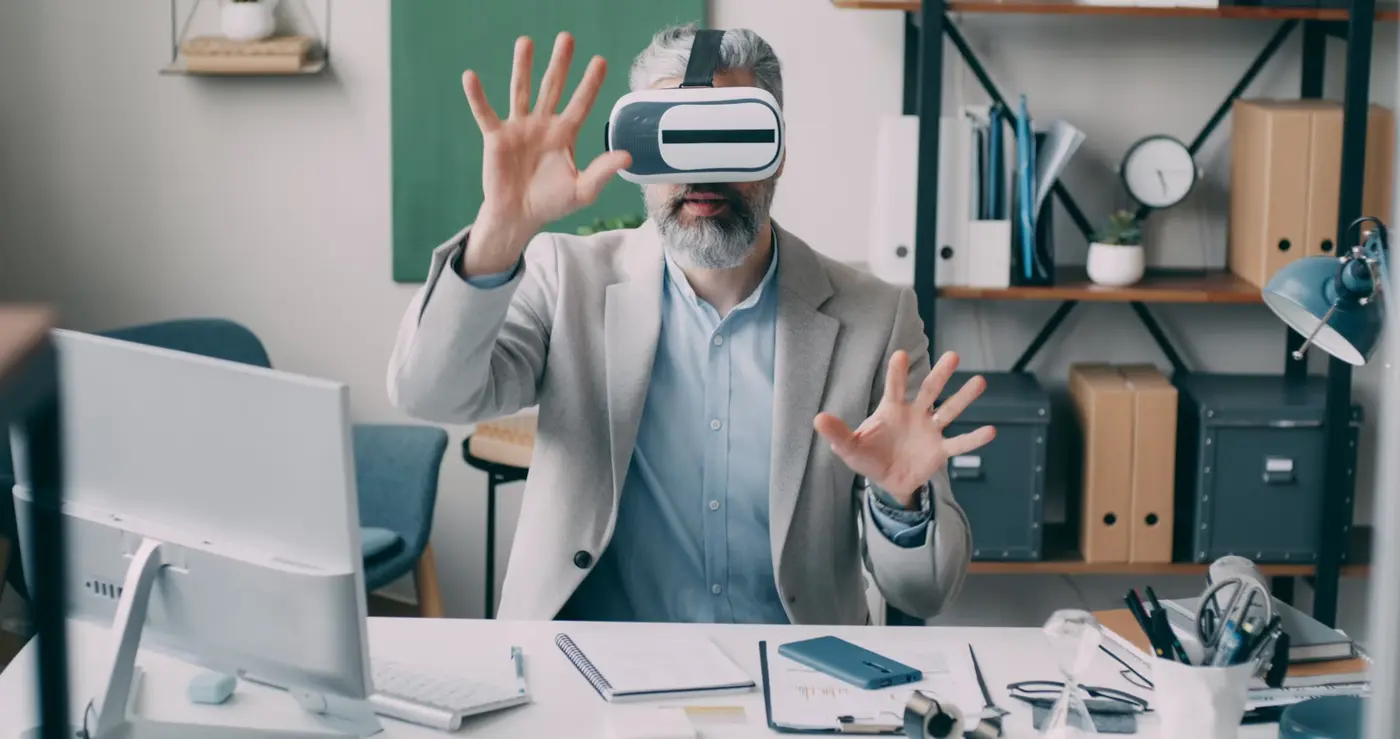
The workforce development benefits of XR adoption, with concrete examples
1. Dramatically improved learning retention
In an XR environment, learners acquire knowledge while acting on "their own judgment," and some data shows retention rates more than doubling compared with purely input-based education.
Example: One study reported that XR-guided work reduced work time and errors by more than 50%.
2. A "safe training environment" for high-risk work
For work involving risk, such as in construction, healthcare and manufacturing, training can be repeated as many times as needed in a virtual space that recreates the site. Training that does not rely on real machines or real sites makes accident-free education possible.
3. Lower training costs and greater efficiency
Walmart has used VR-based employee training to successfully shorten training time and the lead time until employees are put to work. Over the long term, savings on training material costs and trainer labor costs are also significant.
"METATORE," an XR training platform for the construction industry
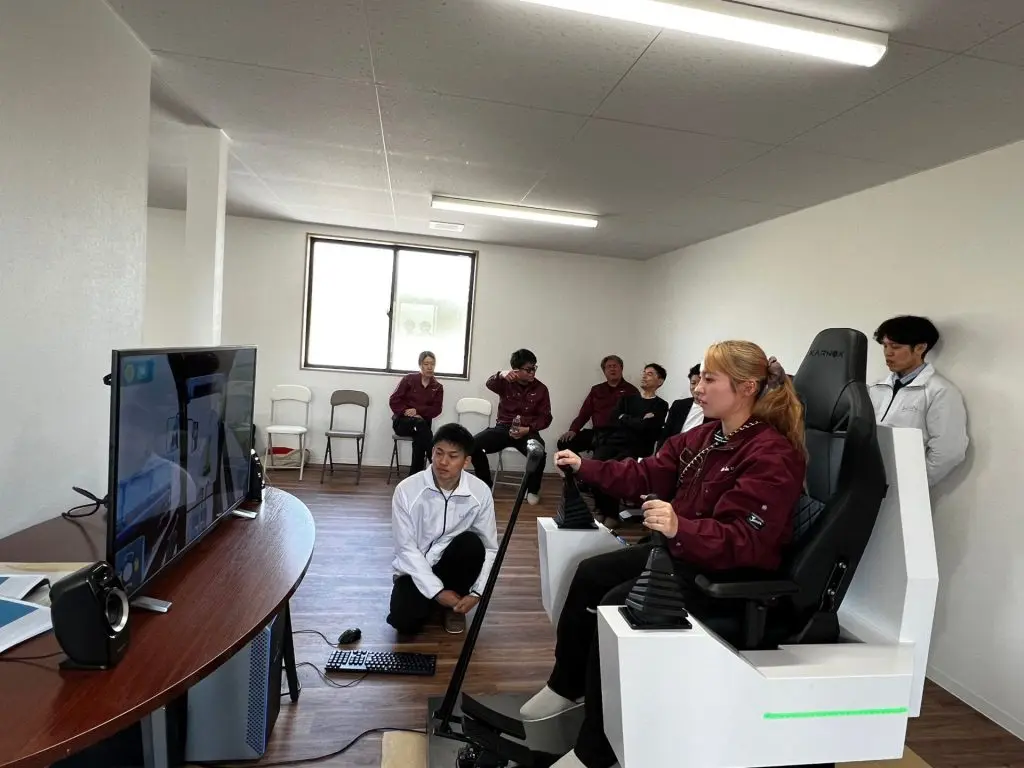
"METATORE," developed and provided by WAN, is a VR training platform that recreates real construction sites with high accuracy using 3D scanning and digital twin technology.
It is being developed as a system that lets trainees experience high-risk, potentially life-threatening work processes in a safe yet realistic simulated form, for companies' new-employee training, safety education and skills transfer.
Features and results:
- Realistic recreation of construction sites Actual work sites are faithfully recreated in VR, enabling training with a real sense of the site. The visual and spatial sense of presence improves how well the training sticks.
- Safe training for high-risk work Dangerous on-site tasks such as work at height can be experienced in VR in advance and used for hazard prediction training, helping to reduce the risk of accidents.
- Used as a mechanism for passing on skills By reflecting the skills and judgment criteria of veteran craftspeople in VR training materials, know-how can be turned into digital assets and passed on across generations.
- Lower training costs and closing training gaps Once developed, it can be used at multiple locations and at different times, making it effective for overcoming trainer shortages and overreliance on OJT.
Challenges and cautions when adopting XR
The barrier of initial costs
- The initial stage of adoption requires devices (VR headsets, etc.) and content development costs
- In some cases, adoption stalls when a return on investment is expected in a short period
Technical constraints and the usage environment
- The environment needs to be prepared to address issues such as users' VR sickness and equipment compatibility problems
- The network environment and PC specifications are also factors to consider
Security and privacy
- Security measures are essential when handling personal data such as facial recognition and location information
- Recreating confidential operations also requires managing the risk of internal information leaks
Employees' psychological barriers
- Depending on age and job type, some people have a psychological resistance to XR technology
- Measures to promote acceptance, such as initial training and hands-on workshops, are effective
Summary
- XR technology is effective for "improving learning retention," "zero-risk hands-on training" and "reducing training costs"
- Many companies are already at the adoption or evaluation stage and are achieving results in training and improving customer experience
- Adoption involves challenges in "initial costs," "technical barriers" and "acceptance," and phased implementation and experience-based introduction are the keys
CTA: Take your first step into XR with WAN.
At World Area Networks, experienced staff provide end-to-end support from planning through executing workforce development strategies that make use of XR technology.
If you are facing challenges such as "we have no in-house expertise in XR development" or "we don't know where to start," please consider WAN's XR adoption support service.
▶Free consultations and document downloads here