- Home
- Works & Tech
- A Guide to Implementing Projection Mapping to Enhance the Visitor Experience at Cultural Facilities
A Guide to Implementing Projection Mapping to Enhance the Visitor Experience at Cultural Facilities

In recent years, cultural facilities such as art museums, museums, and historic buildings have increasingly been introducing "projection mapping" as a way to enhance the experiential value for visitors. This is because its visual impact and spatial staging make it possible to convey the appeal of exhibits and cultural resources more deeply.
In this article, we take a thorough look at everything from the basics of introducing projection mapping at cultural facilities to the planning and implementation process, success stories, and points to watch out for in practice.
Background and challenges behind introducing projection mapping
In recent years, visitor numbers at cultural facilities have been on a downward trend, and many facilities are struggling to attract younger visitors in particular. One reason often cited is that exhibition content lacks visual and experiential appeal, and that the ways information is communicated remain outdated.
Challenges such as short visitor stays and low repeat-visit rates also often stem from relying solely on how exhibits are displayed. To solve these challenges, spatial staging through projection mapping is attracting attention.
For example, by projecting scenes and culture from the past onto the walls of a historic building, a simple static exhibit can evolve into a dynamic, immersive experience. Because this approach stimulates visitors' five senses, it creates memorable experiences that also give people a reason to come back.
Four key points for implementation
There are several key points to keep in mind when implementing projection mapping. Addressing them helps you avoid failure and achieve effective staging.
1. Set clear objectives
- Clarify what kind of experience you want to offer visitors.
- The content of the staging changes depending on the goal, such as education, entertainment, or encouraging social media sharing.
2. Content design and storytelling
- Convey the history of the facility and explanations of exhibits in the form of a story.
- The key is to give the visuals a message rather than treating them as mere decoration.
3. Optimize hardware and spatial design
- Simulate projector placement, illuminance, projection distance, and other factors in advance.
- The equipment and staging methods required also differ between outdoor and indoor settings.
4. Ongoing operation and maintenance
- Do not stop after a single installation; update the content to match seasonal events or theme changes.
- Planning for equipment maintenance and content revisions is also important.
Secrets of success from real-world examples
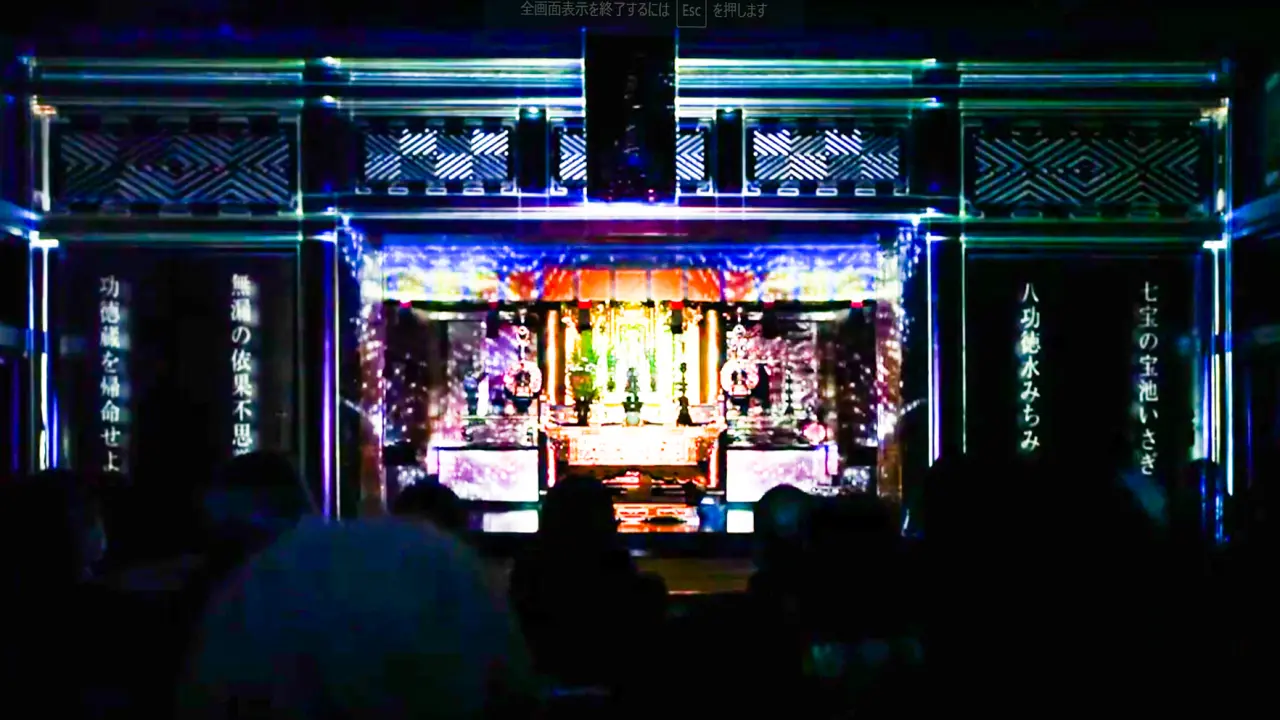
DIG Nembutsu project2016 | Hiroshima Seinen Soryo Shunjukai
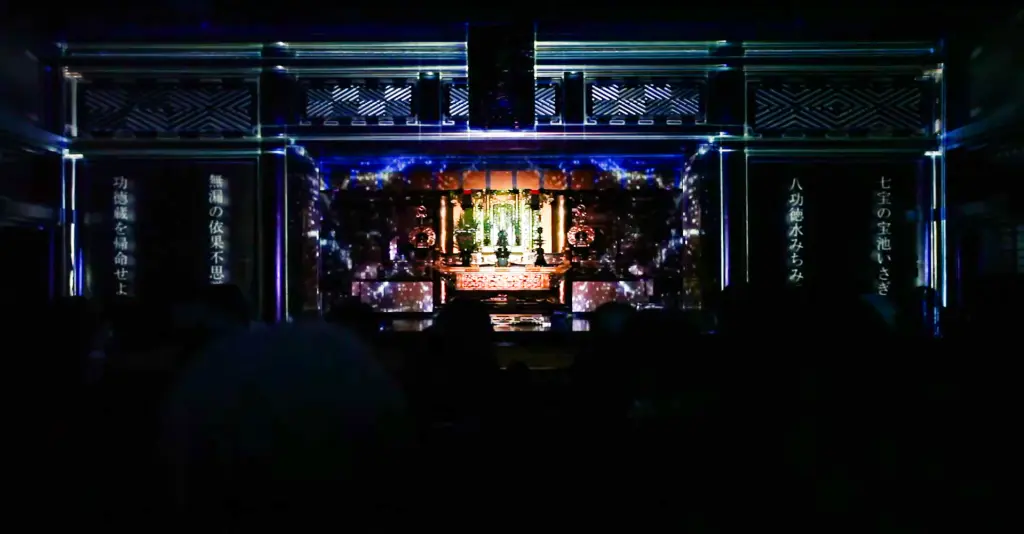
World Area Networks Co., Ltd. has produced many projection mapping works that create new visitor experiences by combining local culture with cutting-edge technology.
A representative example is "DIG Nembutsu project2016," held at Hongwanji Hiroshima Betsuin in Hiroshima City. In this project, the temple's exterior walls served as a canvas, fusing traditional nembutsu chanting with visual staging. By adding a contemporary entertainment element to a religious event, it earned high praise from visitors across generations.
What we did:
- Projection staging that made the most of the temple architecture
- An immersive visual experience synchronized with nembutsu chanting audio
- Encouraging nighttime visits by local residents and tourists
For details👉Projection mapping case study page
In this way, WAN supports raising the value of cultural resources and revitalizing communities through visual staging optimized for the characteristics of each facility.
Points to note for a successful introduction
The following points require attention when introducing projection mapping:
- Harmony with the surroundings: Excessive staging can cause friction with local residents.
- Consideration for sound: Pay attention to volume and noise, especially for outdoor shows at night.
- Ensuring visibility: Securing sufficient projector brightness and viewing space is also important.
- Keeping content fresh: Introduction is not the end; regular content updates are required.
With these in mind, the key to success is planning that incorporates the perspectives of local stakeholders and visitors from the design stage.
Summary
- Projection mapping is an effective way to convey the appeal of cultural facilities dynamically
- In implementation, the objective, story, equipment, and operating structure are important
- The key is to learn from success stories while finding the approach that suits your own facility
- A design that prioritizes the surrounding environment and the visitor's perspective is needed to avoid problems
At WAN, our experienced staff provide end-to-end support for cultural facilities, from planning visual staging strategies to implementation. If you are struggling with planning staging content or selecting projection equipment, please consider using WAN's spatial staging support service.
For detailed consultations and free document downloads, please see the link below.