- Home
- Works & Tech
- How VR Addresses Labor Shortages, Skills Transfer, and Work-Style Reform in Construction [September 2025 Edition]
How VR Addresses Labor Shortages, Skills Transfer, and Work-Style Reform in Construction [September 2025 Edition]
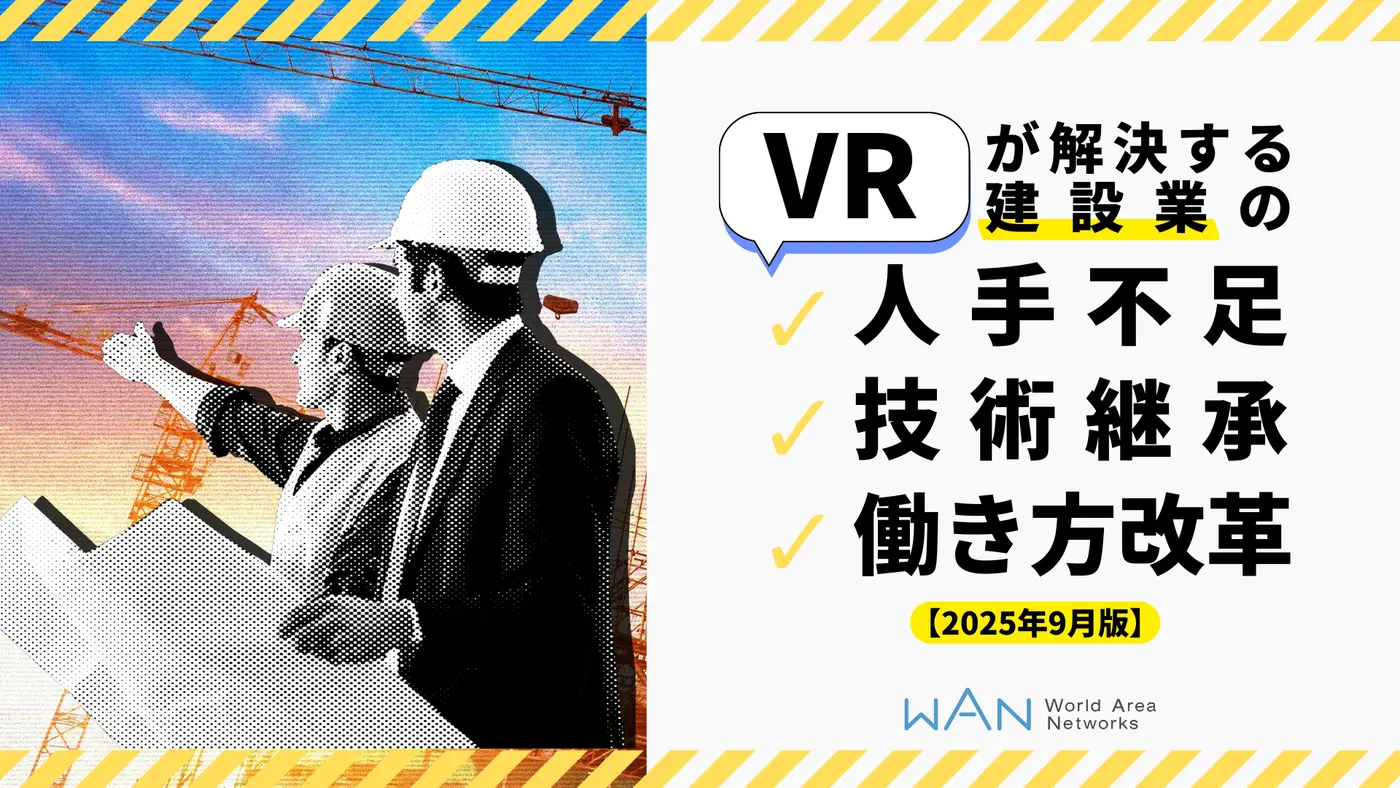
In recent years, the construction industry has faced an urgent need to deal with severe labor shortages, the problem of passing on skills, and work-style reform. One approach attracting attention as a way to solve these challenges is the use of VR (virtual reality).
In particular, VR is expected to be a solution that raises on-site productivity and safety in areas such as pre-construction visualization, strengthened safety training, and more efficient design and verification processes.
Based on the latest trends in the construction industry as of September 2025, this article explains in detail how VR is actually being used, its benefits, and points to note when introducing it, along with the latest use cases.
Background and challenges of VR use in the construction industry
Worsening labor shortages and skills transfer problems
Currently, skilled workers aged 55 and over account for about 35% of all construction workers, and the workforce is aging. Securing young talent and passing on skills have become common challenges across the entire industry.
In addition, safety training and building up on-site experience require a great deal of time and resources, and person-dependent on-the-job training (OJT) is becoming increasingly difficult to rely on.
Work-style reform and higher productivity
With the "cap on overtime work in the construction industry," which took effect in April 2024, improving on-site productivity is more important than ever.
Under these circumstances, the introduction of remote training and construction simulation using VR technology is advancing, helping to save labor and improve efficiency.
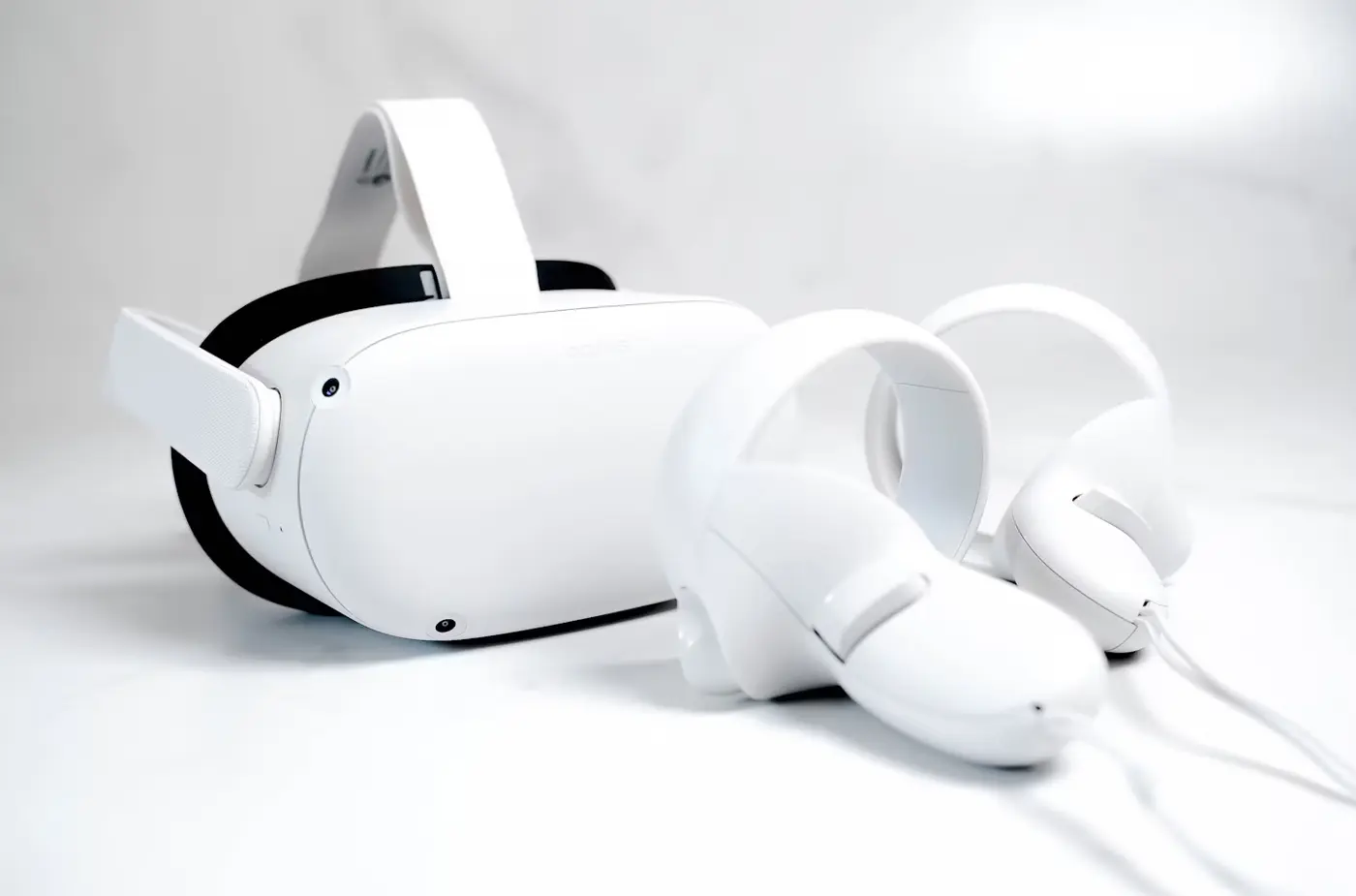
Key uses and benefits of VR at construction sites
VR is producing concrete results in various phases of construction work. The main uses are summarized below.
1. Building consensus through pre-construction simulation
- Completed buildings and structures can be checked in advance in a virtual space
- Smoother consensus-building with clients, owners, and designers
- Less rework caused by mismatched expectations or design errors
2. Safety training and hazard prediction training (KYT)
- Situations close to real sites are recreated in a virtual space
- Visualizing hazard points improves training effectiveness
- Content that even newcomers and inexperienced workers can understand intuitively
3. Remote site management and inspection support
- Integrating drone footage with VR enables remote site checks
- Experienced staff at headquarters can support young workers on site
- Also effective when managing overseas sites or multiple projects at the same time
4. Verifying structure and circulation at the design stage
- High-precision reproduction of structures in conjunction with BIM (Building Information Modeling)
- Circulation and equipment layout can be optimized in a virtual space
- Contributes to higher design quality and lower costs
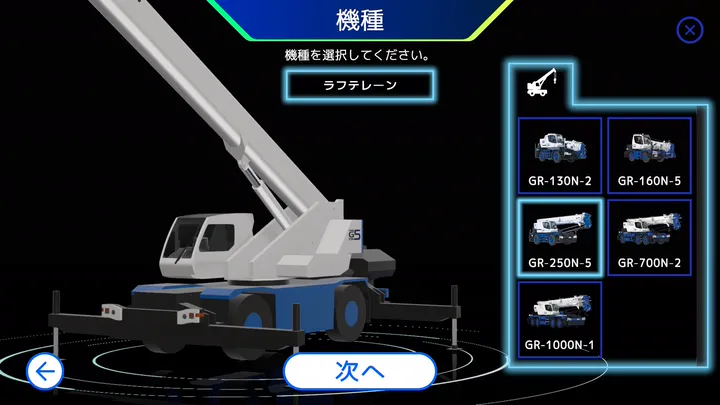
Introducing "METATORE," a VR construction machinery simulator
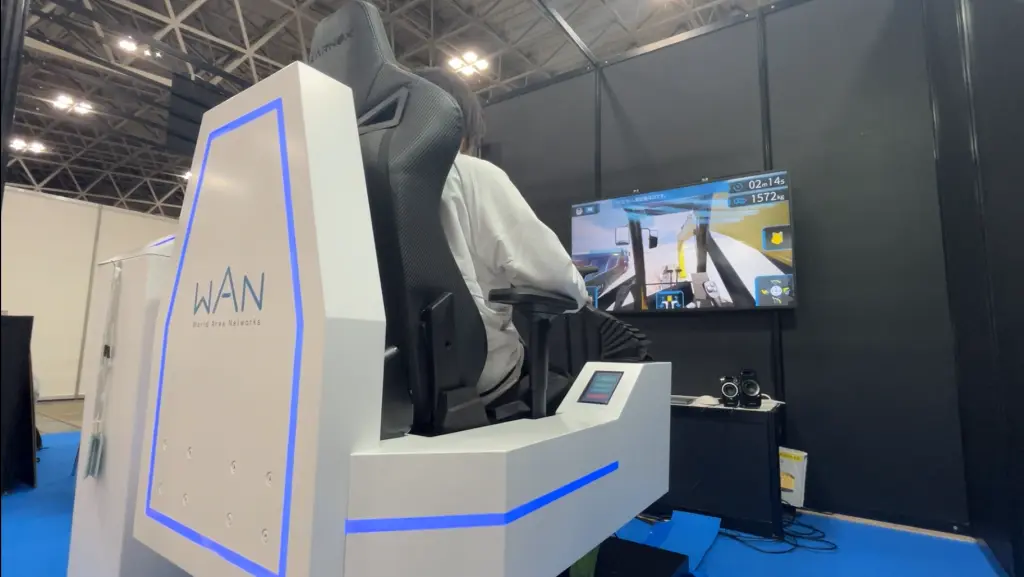
World Area Networks Co., Ltd. supports safety training and skills transfer using VR for the civil engineering and construction industries. The following is an example using our in-house VR content, "METATORE."
Background and challenges
- There was a need for training materials to raise safety awareness and ensure work procedures take root among workers engaged in construction
- Conventional training centered on classroom lectures and paper-based materials, and the gap between these and the actual work environment was a problem
The solution we provided
- Developed safety training content with 3DCG imagery that also supports VR headsets
- Filmed hazardous spots and procedures on site with a 360-degree camera and built training materials for learning from a realistic viewpoint
- Promoted understanding through sight and physical experience, enabling repeated learning and greater sensitivity to hazards
Expected results
- VR that faithfully reproduces the site environment achieves more consistent training effectiveness and higher retention
- Training that enables even newcomers and less experienced workers to get a feel for the site in a short time
- Changes in safety awareness have been reported from the field, and the content is expected to help prevent accidents
Learn more👉 VR construction machinery simulator "METATORE"
Points to note when introducing VR and how to proceed without failure
To introduce VR successfully, it is important to keep the following points in mind.
1. Clarify the purpose of introduction
- Set specific goals, such as "we want to standardize training" or "we want to reduce design rework"
- Clarify the usage scenarios and target operations, and define the scope of introduction
2. Prioritize involving the people on site
- Reflect the opinions not only of the technical department but also of the workers who will actually use it on site
- If the design does not match on-site needs, it is unlikely to take hold
3. Evaluate cost-effectiveness carefully
- Compare introduction and maintenance costs with the expected benefits in numerical terms
- Use this as a basis for deciding between a small start and full-scale introduction
4. Carry out a small-scale trial
- Rather than rolling it out company-wide right away, first run a trial at one site or for one use
- Make repeated improvements based on feedback, leading to full-scale introduction
Summary
- In the construction industry, VR is attracting attention as a way to address labor shortages and skills transfer challenges
- It can be applied to a wide range of tasks, including safety training, pre-construction simulation, and design verification
- The keys to success are "clarifying the purpose of introduction" and "involving the people on site"
- An approach of starting with a small-scale trial and expanding step by step is effective
- WAN has a track record of supporting VR use in the construction industry
At WAN, our experienced staff provide consistent support from VR strategy planning through execution.
If you are short on VR resources or unsure where to start, please consider WAN's VR introduction support service.
For detailed consultations and free document downloads, please see the link below.